Increasing ad spend should lead to stronger results, yet many businesses find themselves investing more while seeing little to no improvement in returns. Costs rise, performance becomes inconsistent, and profitability begins to decline.
In most cases, the issue is not the budget itself but how that budget is being used. Inefficiencies in targeting, messaging, and conversion pathways often lead to wasted spend and reduced impact.
This article explains why ad spend becomes inefficient, where budgets are being lost, and how to fix the underlying issues to improve return on investment and drive more profitable outcomes.
What Does High Ad Spend but Low ROI Actually Mean?
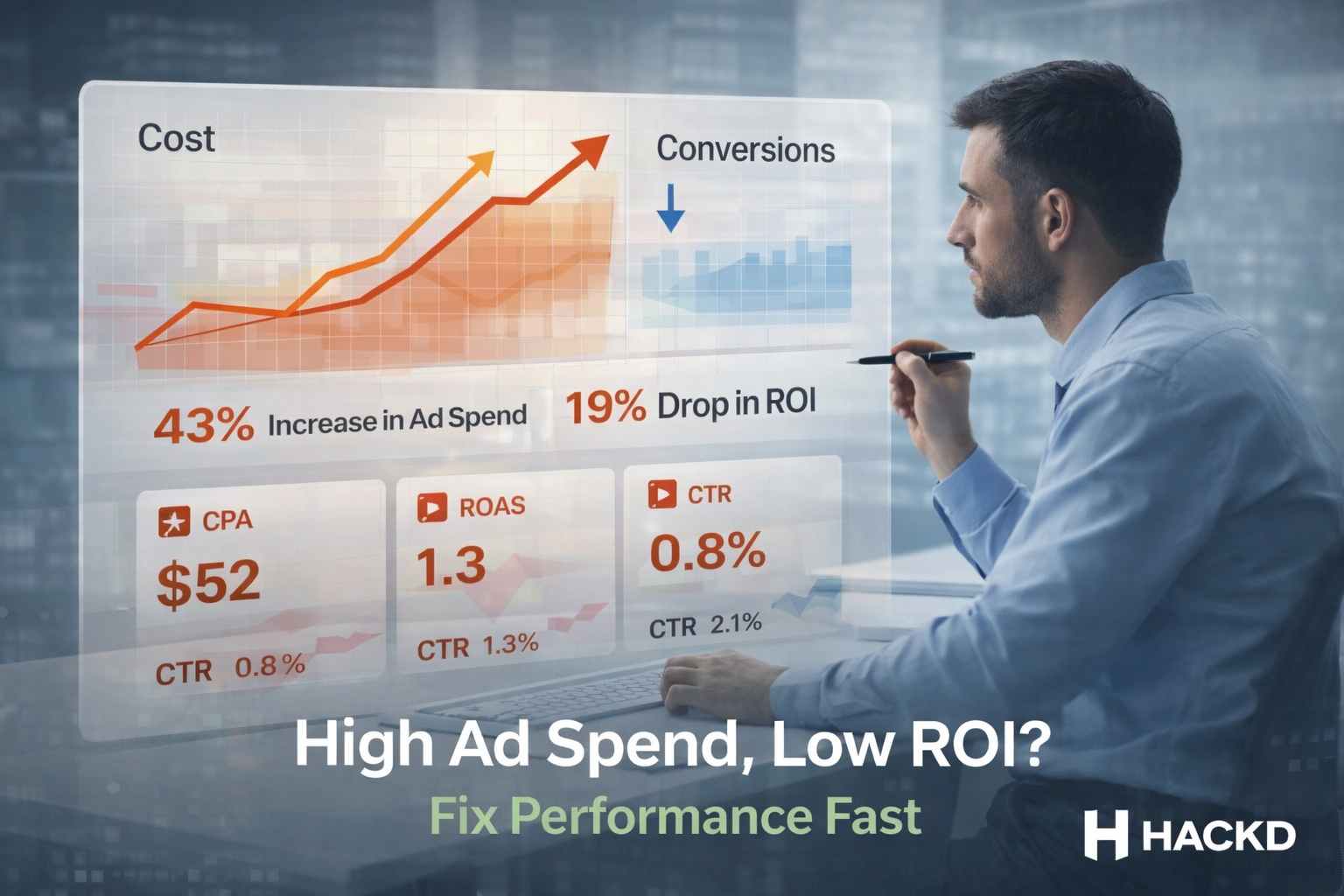
High ad spend with low ROI occurs when the cost of acquiring traffic and conversions outweighs the revenue generated. In practical terms, increasing budget does not lead to proportional growth in returns.
This imbalance often signals inefficiencies in targeting, messaging, or conversion processes, where spend is being absorbed without delivering meaningful business outcomes.
Why Your Ad Spend Is High but ROI Is Low
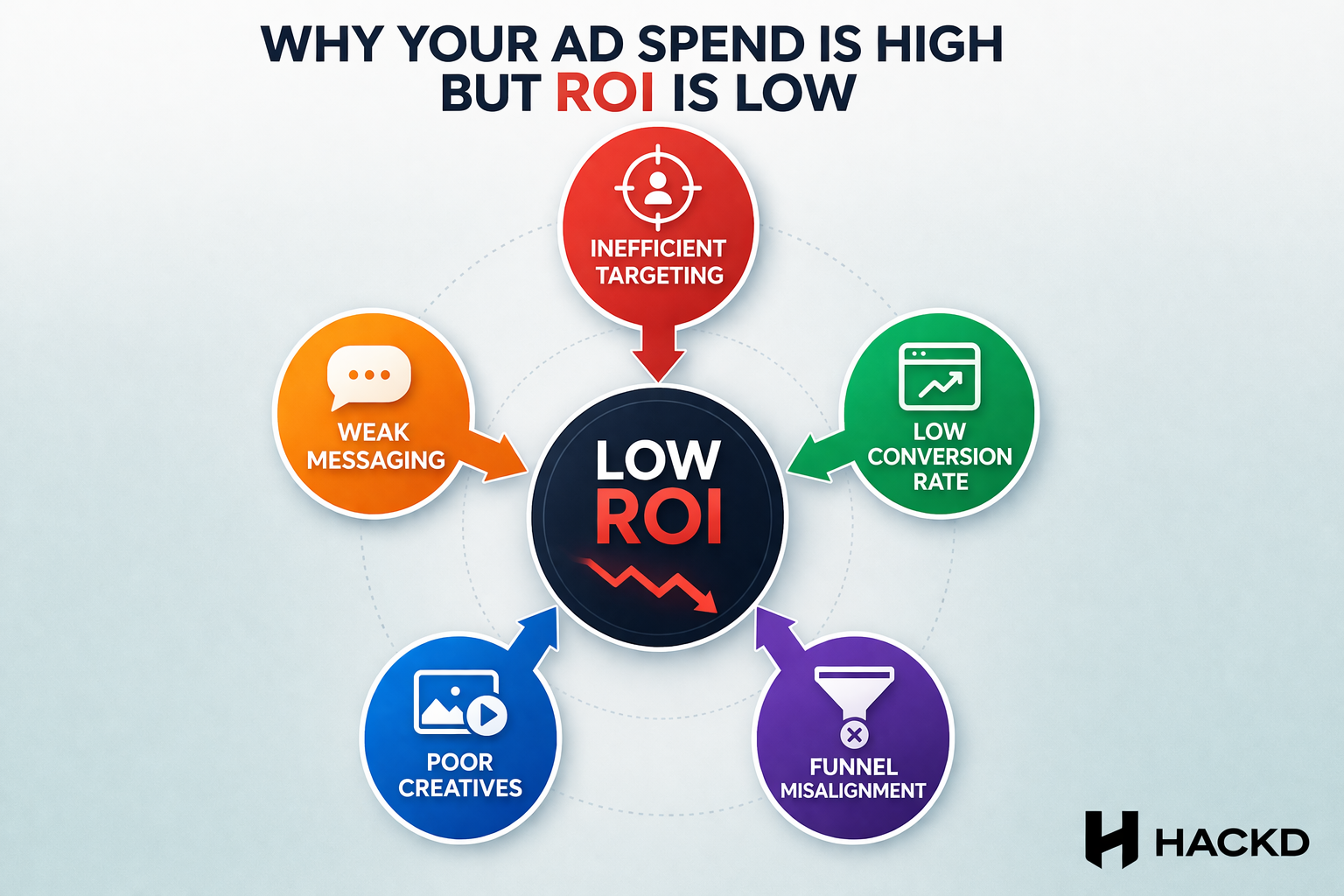
1. Inefficient Targeting
Ad spend increases quickly when campaigns reach the wrong audience. Poor targeting leads to clicks from users with low intent, reducing conversion potential and driving up acquisition costs without improving revenue.
2. Weak Offer or Messaging
Even well-targeted campaigns struggle when the offer does not resonate. If messaging fails to communicate clear value or urgency, users are less likely to convert, resulting in higher spend with minimal returns.
3. Low Conversion Rates
Traffic alone does not guarantee results. When landing pages, calls to action, or user experience are not optimised, a large portion of paid traffic fails to convert, reducing overall return on investment.
4. Poor Creative Performance
Ad creatives that do not capture attention or drive engagement lead to low click-through rates and higher costs. Platforms compensate by increasing spend to maintain delivery, reducing efficiency over time.
5. Lack of Funnel Alignment
Disconnection between ads and landing pages creates friction in the user journey. When expectations set by the ad are not met on the landing page, users drop off, increasing wasted spend and lowering ROI.
Where Your Ad Budget Is Being Wasted
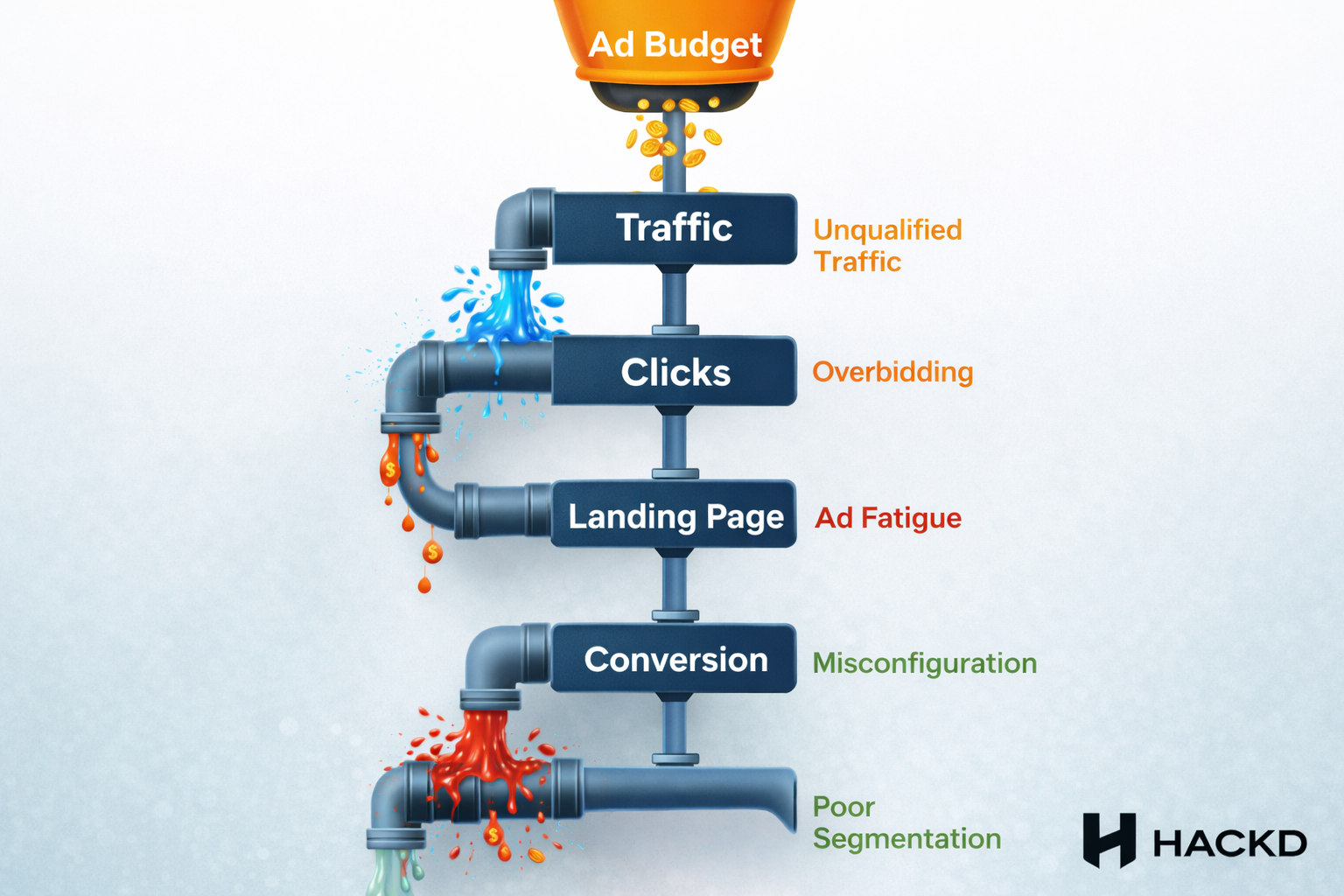
Paying for Unqualified Traffic
A large portion of the budget is often spent attracting users who are unlikely to convert. Broad targeting, irrelevant keywords, or poor audience segmentation lead to clicks without intent, increasing costs without generating meaningful results.
Overbidding Without Strategy
Higher bids do not always translate to better performance. Without a clear bidding strategy, campaigns can overspend to win impressions or clicks that do not contribute to conversions, reducing overall return on investment.
Ad Fatigue Increasing Costs
Repeated exposure to the same creatives lowers engagement over time. As performance drops, platforms require higher spend to maintain delivery, causing costs to rise while results decline.
Platform Misconfiguration
Incorrect campaign settings, such as wrong objectives, bidding models, or optimisation goals, can lead to inefficient spend. When campaigns are not aligned with the intended outcome, the budget is directed toward low-value actions.
Poor Audience Segmentation
Grouping diverse users into a single audience reduces relevance. Without proper segmentation, ads fail to address specific needs or intent levels, leading to lower engagement, higher costs, and wasted budget.
Key Metrics That Reveal Poor ROI
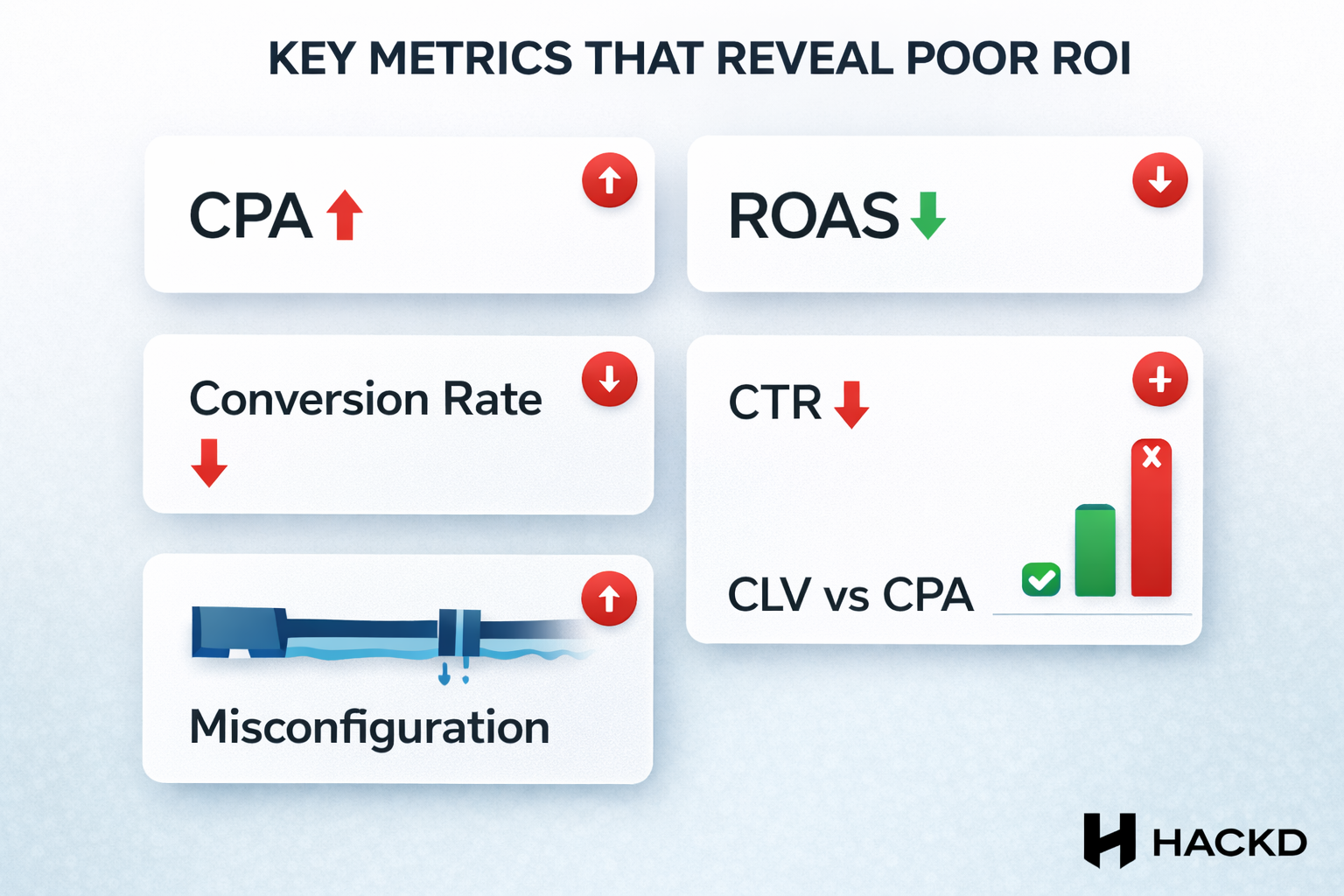
Cost Per Acquisition (CPA)
Cost per acquisition measures how much you spend to generate a single conversion. When CPA continues to rise without an increase in revenue, it indicates inefficiencies in targeting, creative performance, or the conversion process.
Return on Ad Spend (ROAS)
Return on ad spend shows how much revenue is generated for every unit of spend. A declining or inconsistent ROAS signals that campaigns are not converting efficiently or that budget is being allocated to low-performing areas.
Conversion Rate
Conversion rate reflects the percentage of users who take the desired action after clicking an ad. Low conversion rates suggest issues with landing pages, messaging, or user experience, directly impacting overall return.
Click-Through Rate (CTR)
Click-through rate measures how often users engage with your ads. A low CTR indicates weak creative or poor audience alignment, which can increase costs and reduce the effectiveness of your campaigns.
Customer Lifetime Value (CLV)
Customer lifetime value represents the total revenue a customer generates over time. When CLV is low relative to acquisition cost, campaigns become less profitable, limiting the ability to sustain or scale ad spend effectively.
How to Fix High Ad Spend and Low ROI
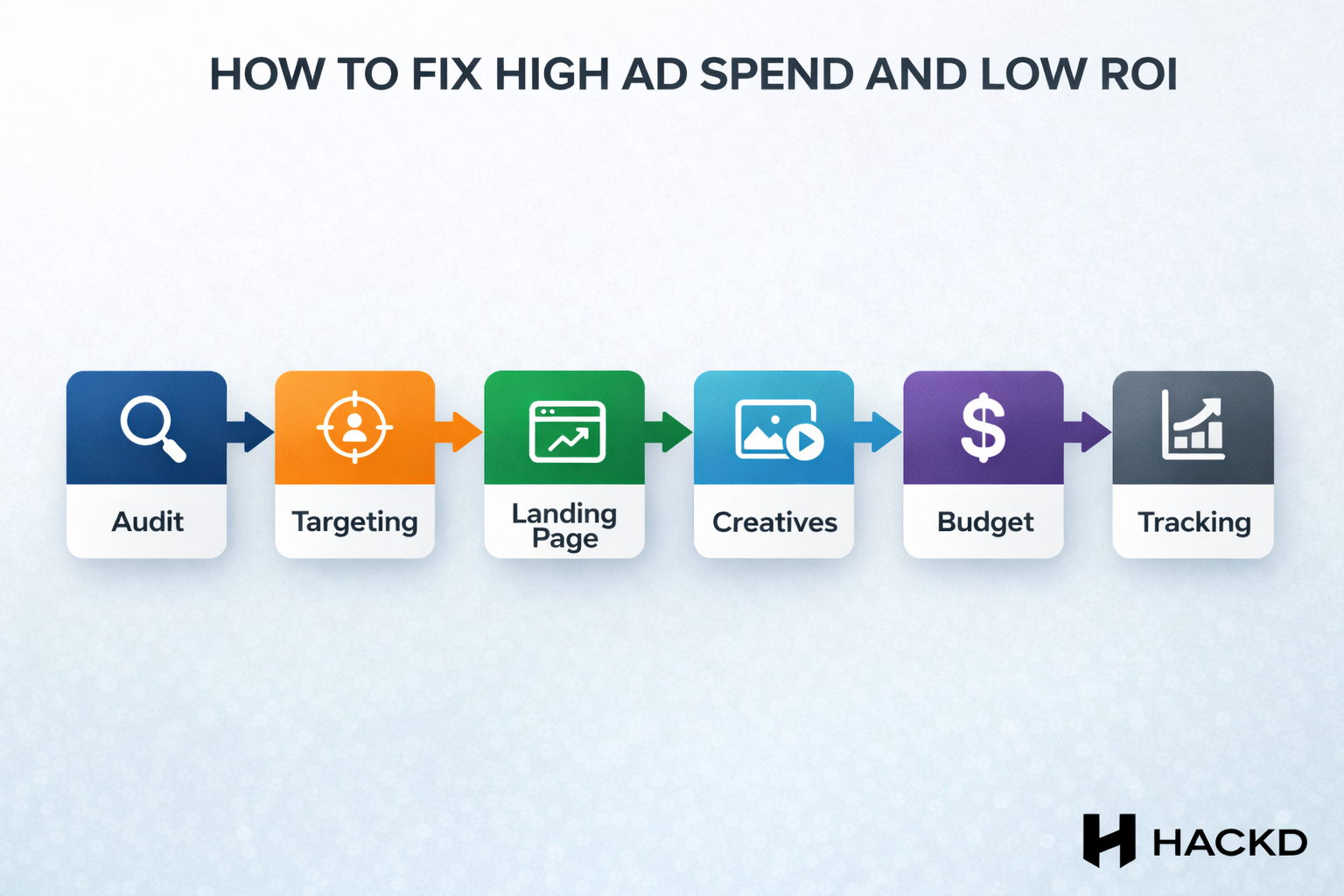
Step 1: Audit Campaign Performance
Start by reviewing campaign data across all channels to identify where spend is underperforming. Analyse metrics such as CPA, ROAS, CTR, and conversion rates to pinpoint inefficiencies and areas where budget is being wasted.
Accurate analysis depends on having the right systems in place. Without proper tracking and reporting, it becomes difficult to identify where inefficiencies exist. Leveraging Data Analysis ensures that campaign decisions are based on real performance insights rather than assumptions.
Step 2: Refine Targeting and Audience Segments
Improve efficiency by narrowing focus on high-intent audiences. Use data to identify segments that convert well and exclude those that do not. Better targeting reduces wasted spend and improves overall campaign performance.
Step 3: Improve Landing Page Conversion Rates
Ensure your landing pages are aligned with your ads and designed to convert. Optimise page speed, messaging clarity, layout, and calls to action so that more users take the desired action after clicking.
Step 4: Optimise Creatives and Messaging
Refresh ad creatives regularly to maintain engagement. Test different formats, headlines, and value propositions to identify what resonates most with your audience and drives higher conversion rates.
Step 5: Adjust Bidding and Budget Strategy
Align your bidding strategy with campaign goals. Reduce spend on underperforming campaigns and reallocate budget to those delivering strong returns. Strategic bidding helps control costs while improving efficiency.
Step 6: Strengthen Tracking and Attribution
Accurate tracking ensures that performance data reflects real outcomes. Implement reliable attribution systems to understand which campaigns and channels drive results, allowing for more informed optimisation decisions.
A Smarter Approach to Profitable Advertising
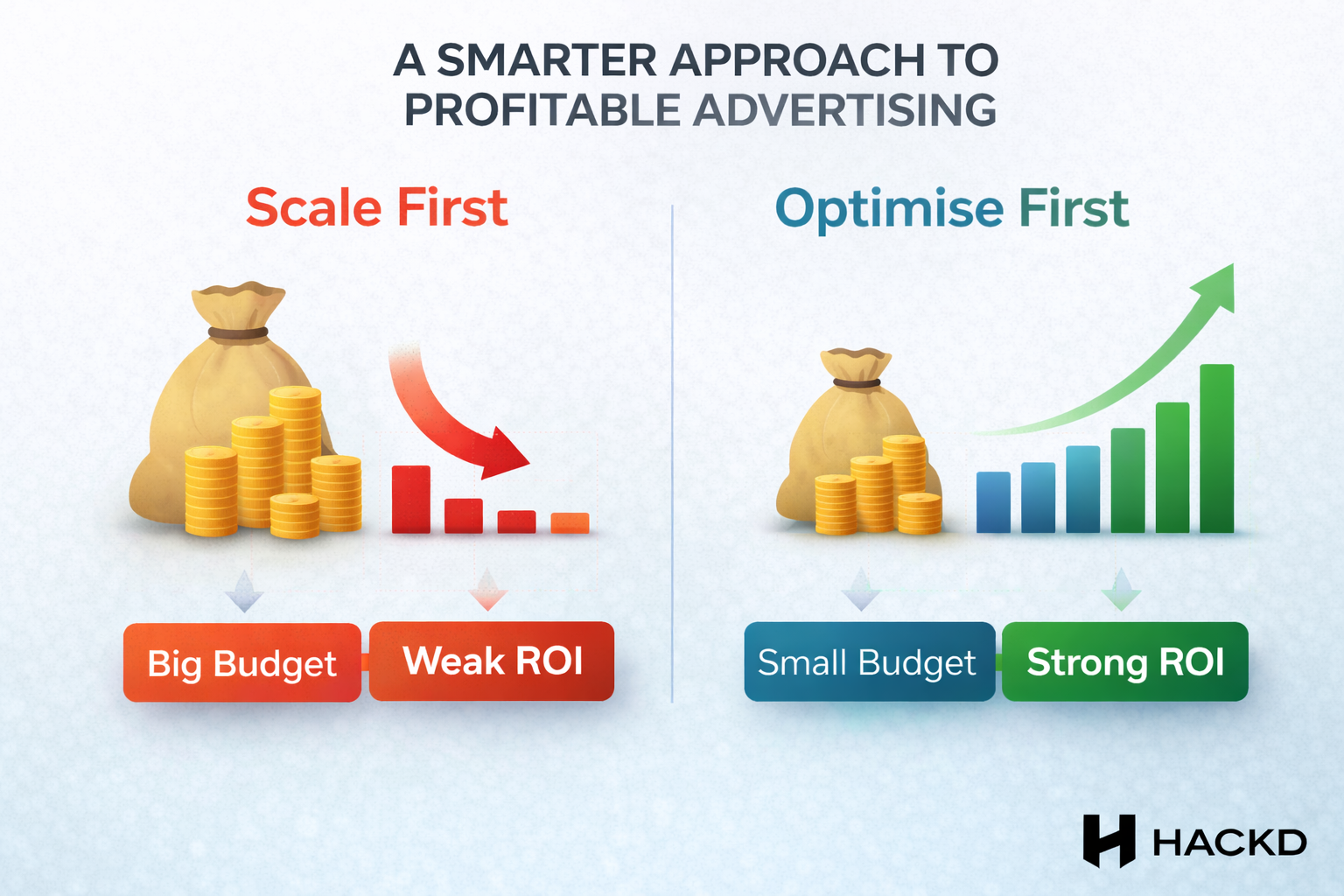
A structured, performance-driven approach is essential to achieving consistent results. Working with a team that understands full-funnel optimisation, such as Marketing & Advertising, allows businesses to align spend with outcomes and build scalable, profitable campaigns.
Focus on Efficiency Before Scale
Increasing the budget without improving efficiency leads to diminishing returns. Prioritising cost control, conversion optimisation, and audience quality ensures that campaigns generate stronger results before additional spend is introduced.
Align Spend with Performance
Budget should follow results, not assumptions. Continuously evaluate which campaigns, audiences, and creatives deliver the highest return, and allocate spend accordingly to maximise profitability.
Build Systems, Not Just Campaigns
Sustainable performance comes from structured processes rather than isolated efforts. Implement consistent testing, optimisation, and data analysis frameworks to maintain efficiency and support long-term growth across all campaigns.
Common Mistakes That Increase Ad Spend Without Results
1. Chasing Traffic Instead of Conversions
Focusing on clicks and impressions without considering conversion quality leads to wasted budget. High traffic does not guarantee revenue if users are not taking meaningful action after engaging with your ads.
2. Scaling Too Early
Increasing budget before campaigns are fully optimised often amplifies inefficiencies. Without stable performance and consistent results, scaling leads to higher costs and reduced return on investment.
3. Ignoring Performance Data
Decisions made without analysing key metrics result in poor optimisation. Overlooking insights from CPA, ROAS, and conversion rates prevents campaigns from improving and leads to unnecessary spend.
4. Overcomplicating Campaign Structure
Complex campaign setups make optimisation difficult. Too many variables can dilute performance insights, making it harder to identify what is working and where budget should be allocated.
5. Neglecting Creative and Audience Testing
Failing to test new creatives and audience segments limits growth potential. Without ongoing experimentation, campaigns become stagnant, engagement declines, and costs increase over time.
How Hackd Growth Improves ROI Across Paid Campaigns
Data-Led Optimisation
Every decision starts with accurate data. Many businesses struggle with ROI because they optimise based on incomplete or misleading metrics rather than real revenue performance. By aligning campaign data with actual business outcomes, we eliminate guesswork and focus on what truly drives returns.
Precision Targeting and Audience Strategy
Reaching the right audience is critical to reducing wasted spend. Targeted advertising improves efficiency by focusing on users most likely to convert, leading to stronger results and better use of the budget. We refine audience segments continuously to ensure campaigns attract high-intent traffic.
Full-Funnel Performance Alignment
Improving ROI requires more than optimising ads alone. We align targeting, creatives, and landing pages to create a seamless user journey, ensuring that traffic converts into measurable outcomes rather than being lost in the funnel.
Continuous Testing and Budget Reallocation
Performance improves through consistent testing and strategic budget shifts. By analysing campaign data, reallocating spend to high-performing segments, and refining creatives and bidding strategies, we maximise efficiency and improve overall return on investment
Stop Wasting Ad Spend and Start Driving Real ROI
High ad spend with low return is not a budget problem but a performance problem. Without identifying where inefficiencies exist, increasing spend will continue to produce inconsistent and unprofitable results.
Focusing on targeting, conversion optimisation, and data-driven decision making creates a clear path to improving returns. When campaigns are structured around efficiency, every dollar spent works harder.
If your ad spend is not delivering results, the solution lies in refining strategy, improving execution, and building systems that turn spend into measurable growth.
FAQs
1. Why is my ad spend high, but conversions are low?
High spend with low conversions usually points to poor targeting, weak messaging, or an ineffective landing page. When traffic is not aligned with intent, users engage but do not take action.
2. How can I reduce ad spend without losing results?
Focus on improving efficiency rather than cutting the budget. Optimise targeting, refine creatives, and improve conversion rates so that existing spend generates stronger outcomes.
3. What is a good ROI for paid advertising?
A good ROI depends on your margins and business model, but campaigns should consistently generate more revenue than they cost. Stable and profitable returns indicate efficient performance.
4. Why does increasing the budget reduce ROI?
Increasing spend often expands reach to less qualified audiences. Without strong optimisation, this leads to higher costs and lower conversion efficiency.
5. How do I know where my ad budget is being wasted?
Analyse performance metrics such as CPA, ROAS, and conversion rates. Identifying campaigns or audiences with high costs and low returns helps pinpoint where budget inefficiencies exist.
6. Should I pause campaigns with low ROI?
Not always. Instead of pausing immediately, analyse the cause of low performance. Optimising targeting, creatives, or landing pages can often improve results without restarting campaigns.




.png)

.jpg)