.jpg)
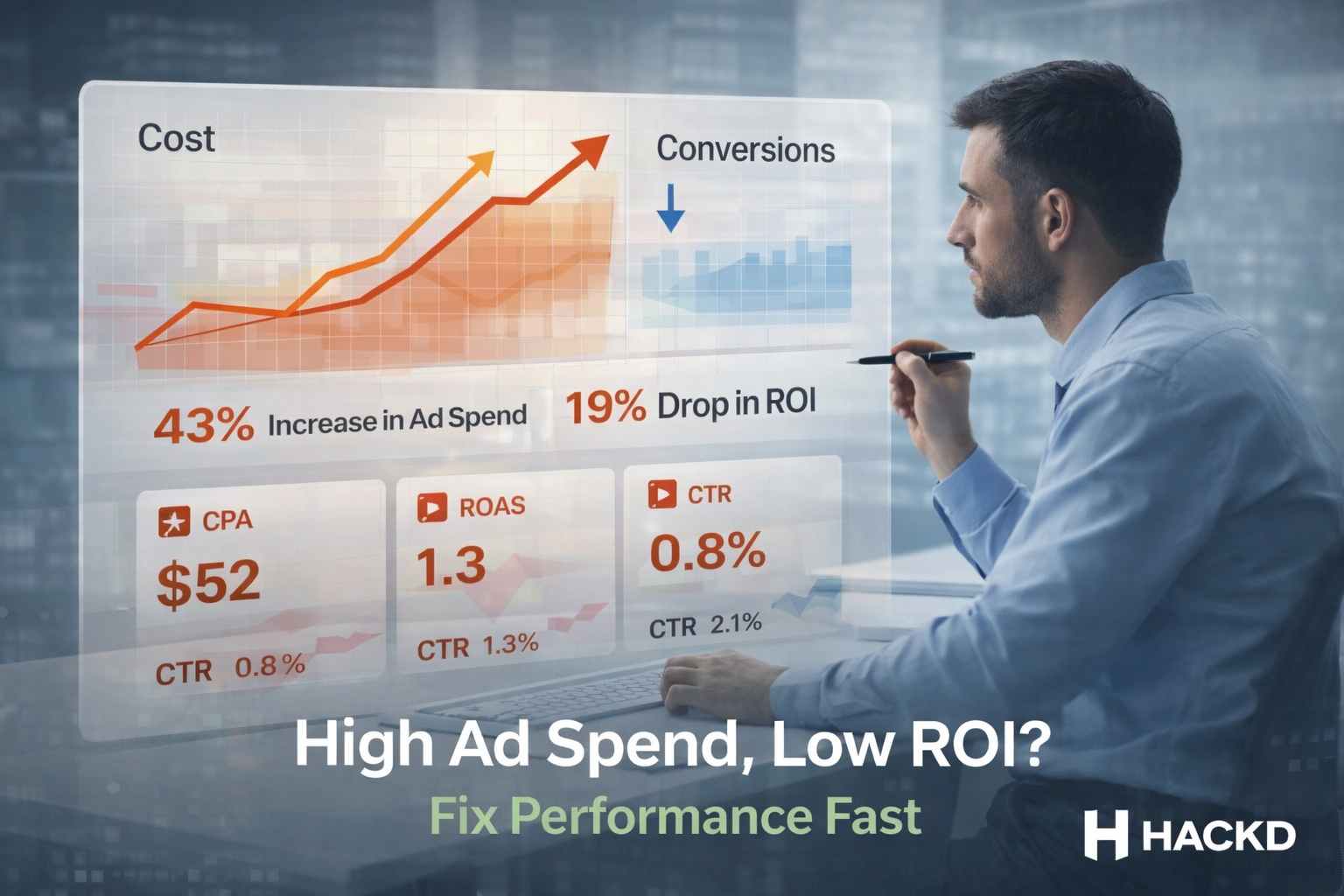
Scaling paid campaigns should lead to predictable growth, yet many businesses reach a point where increasing the budget no longer improves results. Instead, costs rise, returns decline, and performance becomes harder to control.
What often appears as a scaling issue is usually a deeper problem within targeting, creative, or the conversion process. Without addressing these gaps, campaigns plateau and efficiency drops.
This article breaks down why paid campaigns stop scaling, what is holding performance back, and how to fix the underlying issues to achieve consistent, profitable growth.
What Does It Mean When Paid Campaigns Are Not Scaling?
Paid campaigns are considered scalable when increasing the budget leads to proportional or improved returns. In simple terms, as spend grows, conversions and revenue should grow without a significant rise in cost per acquisition.
When paid campaigns are not scaling, performance begins to break down as spend increases. Costs rise faster than results, conversion rates decline, or returns become inconsistent across campaigns.
This usually indicates underlying inefficiencies in targeting, creative performance, or the conversion funnel, preventing campaigns from sustaining growth at higher spend levels.
Why Paid Campaigns Fail to Scale
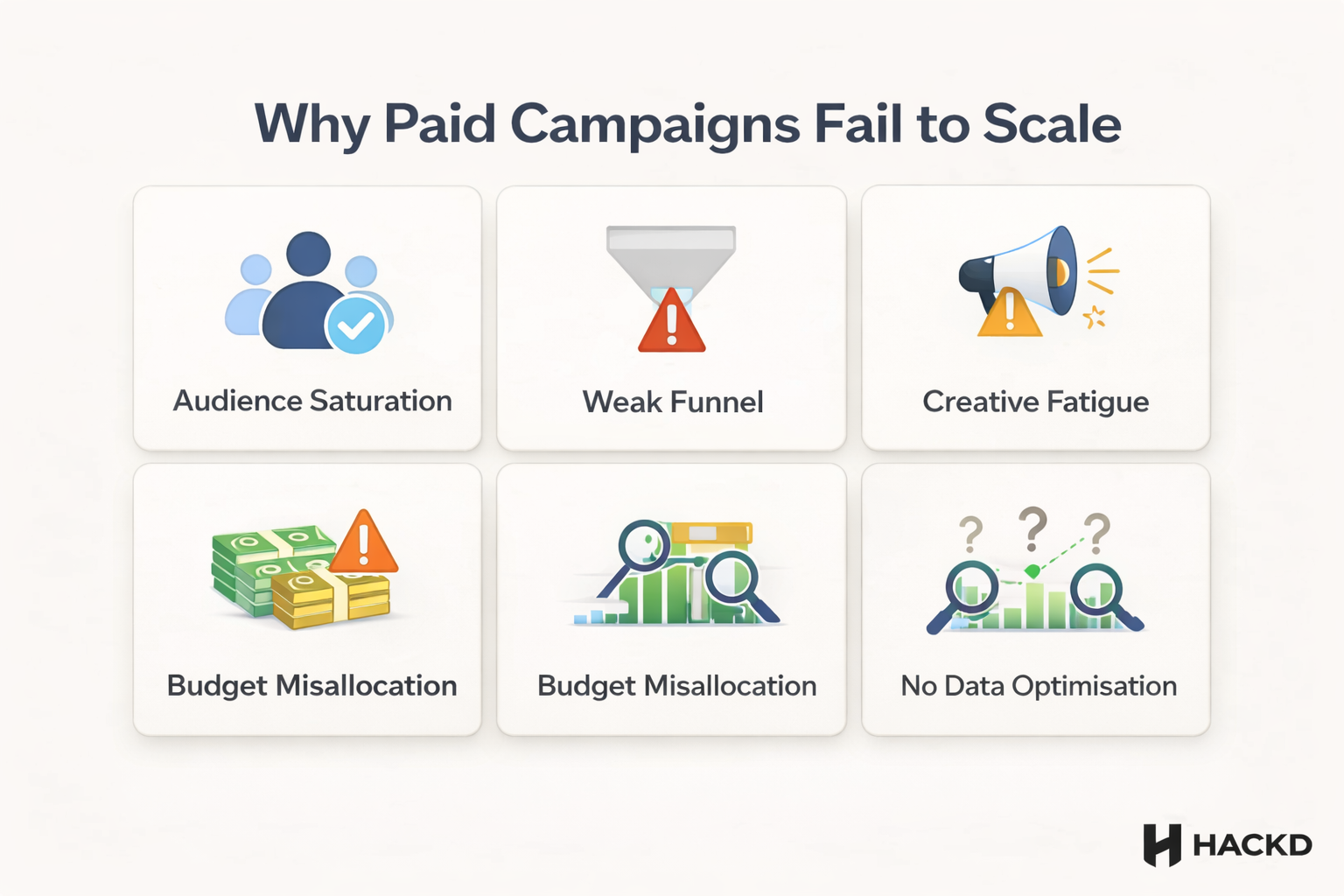
1. Limited Audience Size
Growth slows when campaigns target audiences that are too narrow or already saturated. As the budget increases, ads are repeatedly shown to the same users, leading to diminishing returns, higher costs, and reduced engagement over time.
2. Weak Conversion Funnel
Traffic alone does not drive growth if the conversion path is inefficient. When landing pages, messaging, or user experience fail to convert consistently, scaling only increases wasted spend rather than improving results.
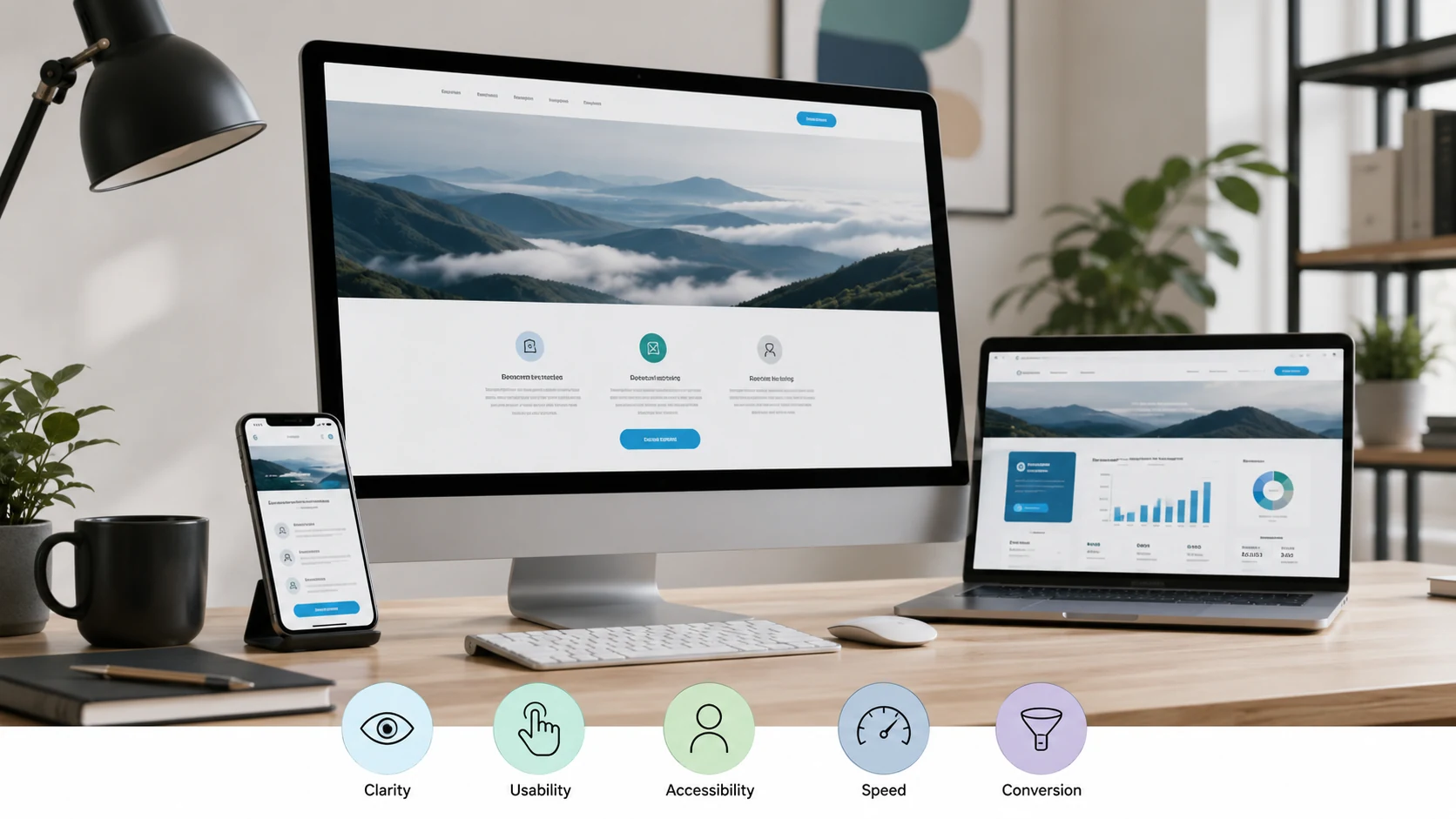
If your landing pages are underperforming, investing in conversion-focused web development can significantly improve how users interact and convert.
3. Creative Fatigue
Ad performance declines when the same creatives are shown repeatedly. Over time, users stop engaging, click-through rates drop, and platforms increase costs to maintain delivery, making it difficult to scale efficiently.
4. Poor Budget Allocation
Scaling becomes ineffective when the budget is not directed toward high-performing campaigns. Over-investing in underperforming segments or failing to redistribute spend limits the ability to generate consistent returns at scale.
5. Lack of Data-Driven Optimisation
Campaigns struggle to grow when decisions are based on assumptions instead of performance data. Without continuous testing and optimisation, inefficiencies remain hidden, preventing campaigns from improving as spend increases.
Key Bottlenecks That Prevent Campaign Scaling
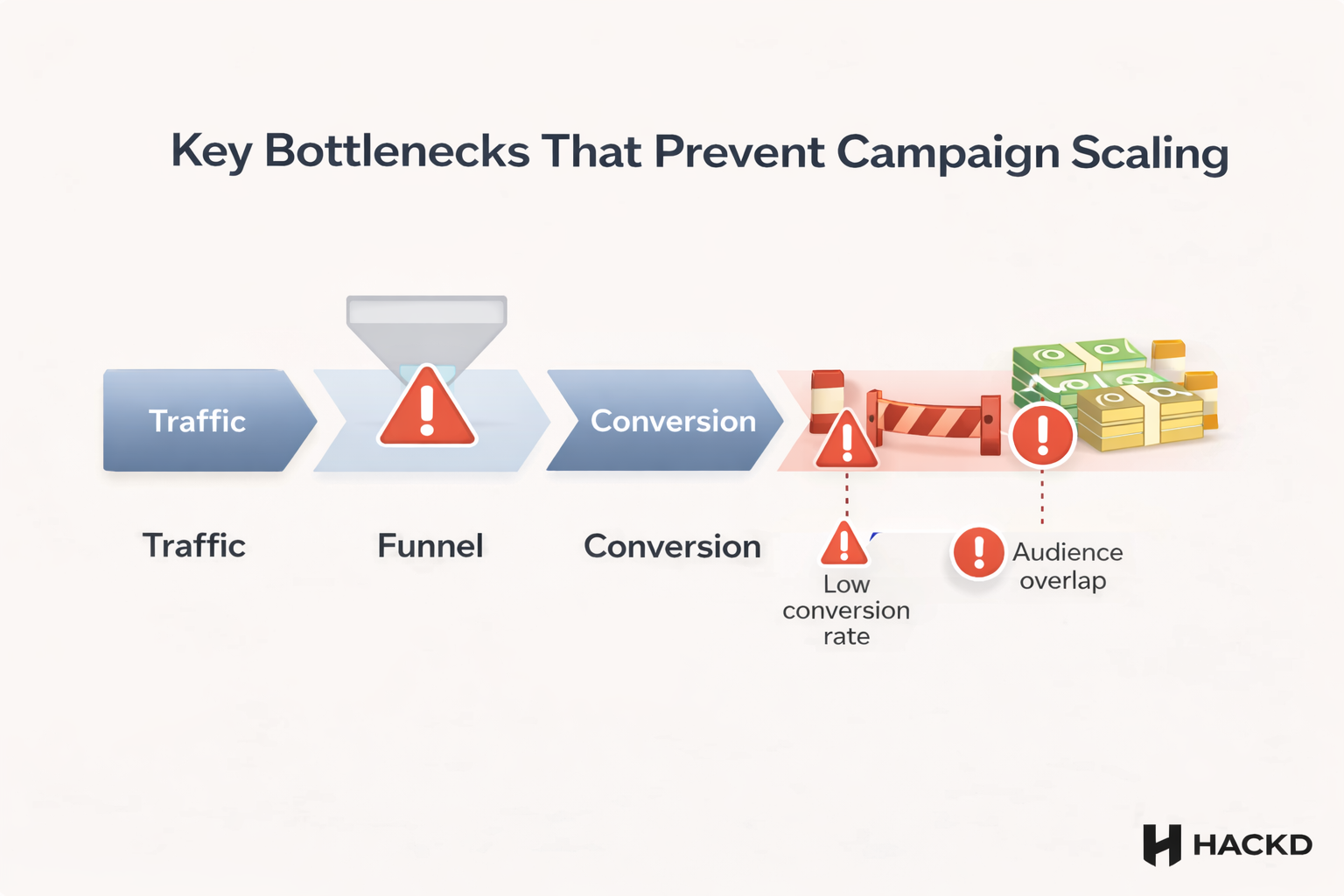
1. High Customer Acquisition Cost (CAC)
Rising acquisition costs limit the ability to scale profitably. As spend increases, inefficiencies in targeting, bidding, or creative performance drive costs higher, reducing margins and making further investment unsustainable.
2. Low Conversion Rates
Scaling traffic without improving conversion rates leads to diminishing returns. If only a small percentage of users take action, increasing spend simply amplifies inefficiencies rather than improving overall performance.
3. Platform Learning Limitations
Advertising platforms rely on consistent data to optimise delivery. Frequent changes, low conversion volume, or unstable performance can disrupt the learning phase, making it harder for algorithms to identify and scale winning patterns.
4. Tracking and Attribution Issues
Inaccurate tracking prevents clear performance insights. When conversions are not properly recorded or attributed, optimisation decisions become unreliable, leading to poor budget allocation and limited scalability.
5. Audience Overlap and Saturation
Running multiple campaigns targeting similar audiences creates internal competition. This overlap increases costs, reduces efficiency, and prevents campaigns from reaching new users effectively as spend grows.
How to Fix Paid Campaigns That Are Not Scaling
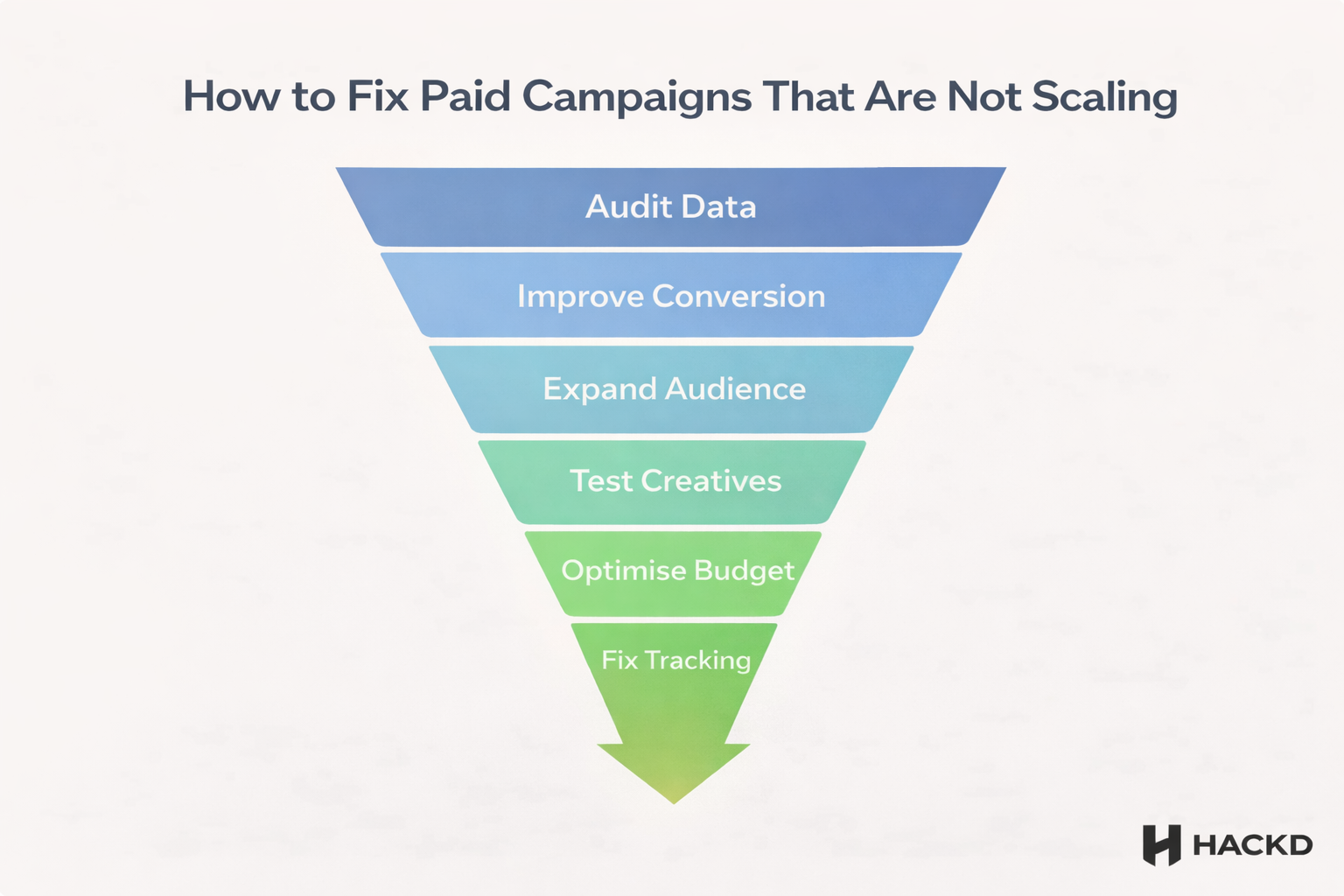
Step 1: Audit Campaign Performance Data
Start by analysing performance across campaigns, ad sets, and creatives to identify where inefficiencies exist. Focus on key metrics such as cost per acquisition, conversion rate, click-through rate, and return on ad spend. This process highlights what is working, what is underperforming, and where optimisation is required before increasing spend.
Step 2: Improve Conversion Rates Before Scaling Spend
Ensure your landing pages and funnel are converting efficiently before allocating more budget. Optimise messaging, page structure, load speed, and calls to action so that existing traffic delivers better results. Scaling without fixing conversion issues only increases wasted spend.
Step 3: Expand and Segment Your Audience
Growth requires reaching new and relevant audiences. Broaden targeting strategically by testing new segments, lookalike audiences, and interest groups. Segment audiences based on behaviour and intent to maintain relevance while increasing reach.
Step 4: Refresh and Test New Creatives
Introduce new ad creatives regularly to maintain engagement and prevent performance decline. Test different formats, messaging angles, and visuals to identify what resonates most with your audience. Continuous creative testing supports consistent performance at scale.
Step 5: Optimise Budget Allocation
Reallocate budget towards high-performing campaigns and reduce spend on underperforming ones. Use performance data to guide investment decisions, ensuring that the budget is directed where it generates the strongest returns.
Step 6: Strengthen Tracking and Attribution
Accurate data is essential for scaling effectively. Implement reliable tracking systems to capture conversions and user behaviour across channels. Clear attribution enables better optimisation decisions and ensures that scaling efforts are based on accurate insights.
Scaling Framework for Paid Advertising
Testing Before Scaling
Effective scaling starts with validation. Campaign elements such as audiences, creatives, and offers should consistently perform well before increasing budget. Without proven performance, scaling introduces risk and amplifies inefficiencies rather than delivering growth.
Vertical vs Horizontal Scaling
Scaling can be approached in two ways. Vertical scaling involves increasing budget on existing high-performing campaigns, while horizontal scaling focuses on expanding into new audiences, creatives, or platforms. A balanced approach allows for controlled growth while maintaining performance stability.
Performance Benchmarks to Hit Before Scaling
Clear performance thresholds help determine when a campaign is ready to scale. Metrics such as stable cost per acquisition, consistent conversion rates, and positive return on ad spend indicate that campaigns can handle increased budget without significant performance decline.
Signs Your Paid Campaign Is Ready to Scale
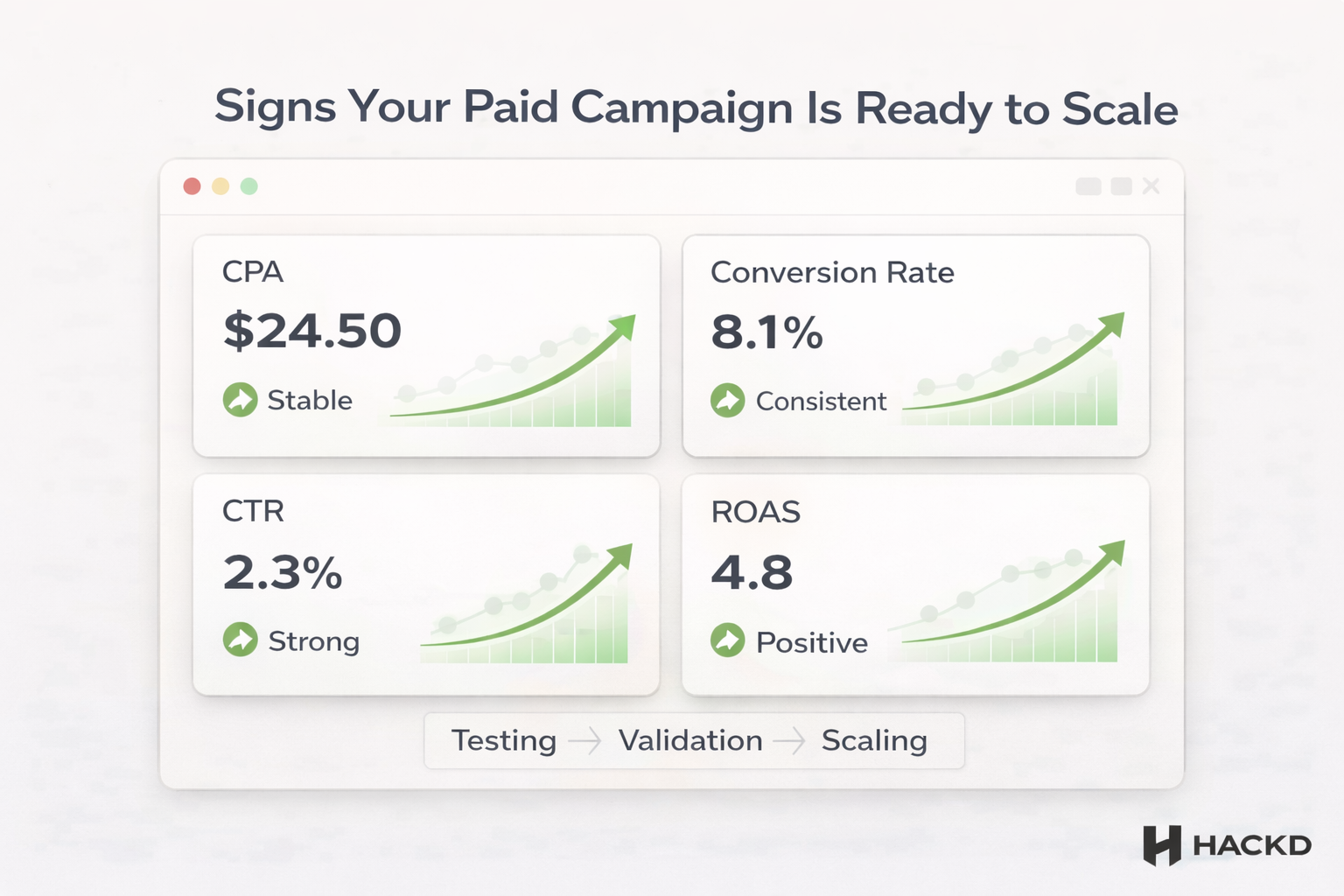
Stable Cost Per Acquisition
A consistent cost per acquisition over time indicates that your campaign is operating efficiently. When CPA remains stable across different time periods and budget levels, it suggests that performance is not heavily dependent on limited conditions.
Consistent Conversion Rates
Reliable conversion rates show that your funnel is working effectively. When users consistently take action after clicking your ads, it becomes easier to scale traffic without introducing significant performance drops.
Strong Engagement Metrics
High click-through rates and sustained engagement signal that your creatives and messaging resonate with your audience. Strong engagement supports better delivery from advertising platforms and helps maintain performance as spend increases.
Positive Return on Ad Spend (ROAS)
A consistently positive return on ad spend confirms that campaigns are generating more revenue than they cost. When ROAS remains strong over time, it provides a solid foundation for increasing budget with confidence.
Common Mistakes That Stop Campaigns From Scaling
1. Scaling Too Quickly
Increasing the budget aggressively can disrupt campaign performance. Sudden changes often reset platform optimisation, leading to unstable delivery, higher costs, and reduced efficiency before the system can adapt.
2. Ignoring Funnel Optimisation
Driving more traffic without improving the conversion process limits results. If landing pages and user journeys are not optimised, scaling only increases the volume of users who do not convert.
3. Relying on One Audience
Focusing on a single audience restricts growth potential. Over time, this leads to saturation, higher costs, and reduced engagement as the same users are repeatedly targeted.
4. Not Testing Enough Variations
Campaigns stagnate when testing is limited. Without ongoing experimentation across creatives, audiences, and messaging, it becomes difficult to identify new opportunities for growth and maintain performance at scale.
5. Misinterpreting Data
Incorrect analysis leads to poor decisions. Optimising based on incomplete or misleading data can result in ineffective budget allocation and missed opportunities to improve campaign performance.
How Hackd Growth Scales Paid Campaigns for Consistent Results
Data-Driven Strategy
Every campaign decision is guided by performance data rather than assumptions. By analysing key metrics across channels, we identify what drives results and remove inefficiencies before scaling, ensuring that growth is built on a solid foundation.
Full-Funnel Optimisation
Scaling success depends on more than ad performance alone. We optimise the entire user journey, from initial engagement to final conversion, ensuring that increased traffic translates into measurable business outcomes.
Continuous Testing and Iteration
Consistent growth requires ongoing experimentation. We test audiences, creatives, offers, and campaign structures continuously, allowing us to refine performance and uncover new opportunities for scaling without compromising efficiency.
Integration with Analytics and AI Systems
Advanced tracking and analytics systems provide deeper performance insights. By integrating data across platforms and leveraging AI-driven optimisation, we improve targeting accuracy, enhance decision-making, and support scalable, long-term growth.
Fix the Bottlenecks, Then Scale with Confidence
Scaling paid campaigns without fixing what is holding them back only leads to higher costs and unstable performance. Real growth comes from identifying inefficiencies early and resolving them before increasing spend.
A structured approach built on data, optimisation, and continuous testing creates the conditions for consistent results. When campaigns are supported by strong fundamentals, scaling becomes controlled, predictable, and profitable.
If your paid campaigns are not scaling, the priority is not more budget but better systems, clearer insights, and smarter execution.
FAQs
1. Why are my paid campaigns not scaling?
Paid campaigns often fail to scale due to limited audience size, weak conversion funnels, creative fatigue, or poor budget allocation. These factors reduce efficiency as spend increases, causing costs to rise faster than results.
2. How do I scale paid ads without increasing costs?
Focus on improving conversion rates, refining targeting, and testing new creatives before increasing budget. Scaling becomes more efficient when existing campaigns are optimised to deliver better results from the same traffic.
3. What is a good ROAS before scaling a campaign?
A good return on ad spend depends on your margins, but campaigns should consistently generate profitable returns over time. Stable and predictable ROAS is a strong indicator that a campaign is ready to scale.
4. Why does CPA increase when scaling campaigns?
Cost per acquisition often rises due to audience saturation, increased competition, or inefficient targeting. As campaigns expand, reaching less qualified users can reduce efficiency and increase costs.
5. How long should I test a campaign before scaling?
Campaigns should be tested until performance stabilises and enough data is collected. This typically depends on conversion volume, but consistent results over multiple cycles indicate readiness for scaling.
6. What is the difference between vertical and horizontal scaling?
Vertical scaling increases budget within existing campaigns, while horizontal scaling expands into new audiences, creatives, or platforms. Combining both approaches allows for controlled and sustainable growth.



.png)