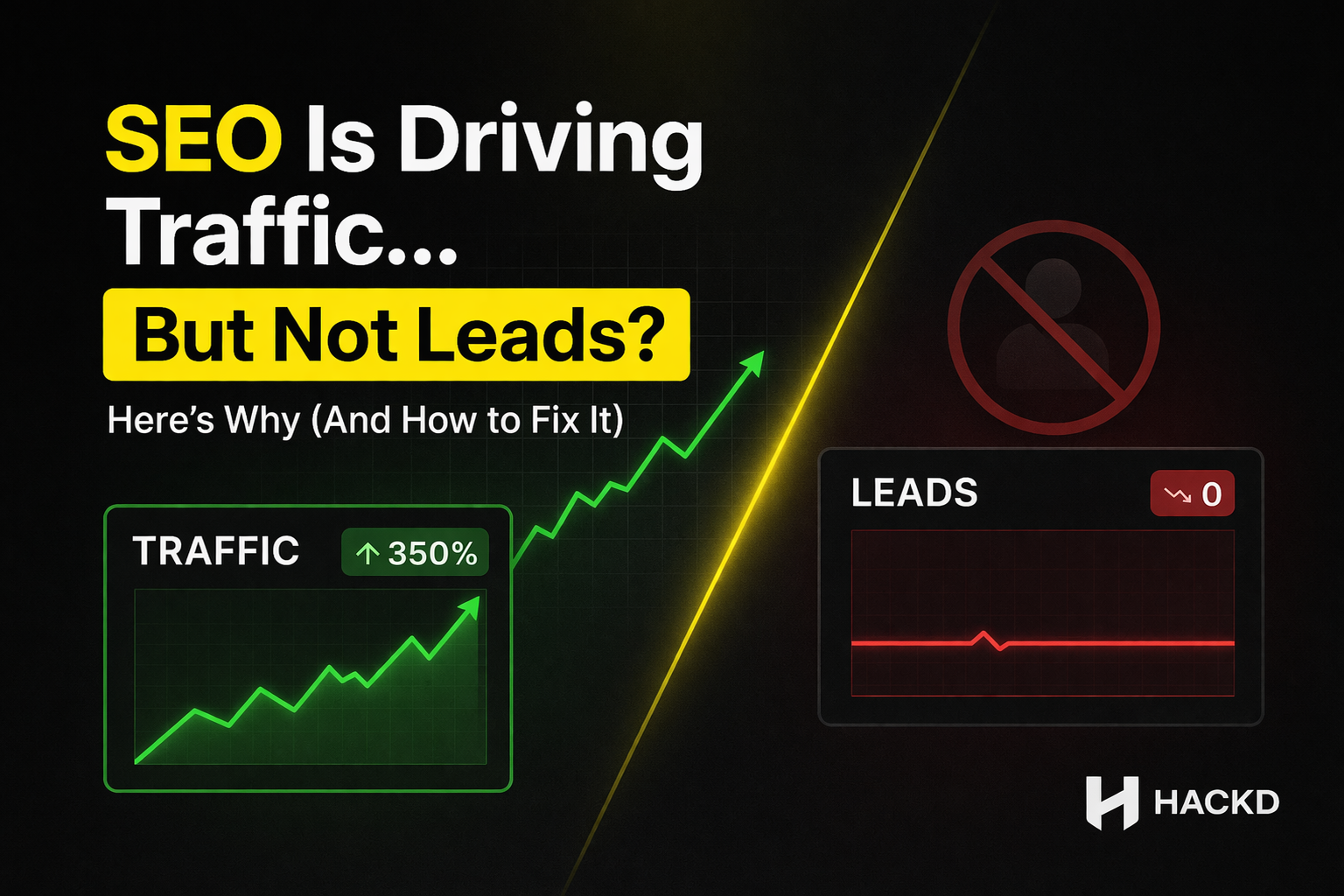
Ranking on search engines should translate into visibility, traffic, and consistent growth. Yet many businesses find their rankings stagnating or dropping despite ongoing SEO efforts, leaving them without the results they expected.
In most cases, the issue is not a lack of activity but the presence of overlooked mistakes that quietly limit performance. These errors affect how search engines crawl, understand, and rank your website.
To improve rankings, it is essential to identify and fix these issues systematically. Once corrected, SEO becomes more predictable, scalable, and aligned with long-term growth.
What Are SEO Mistakes and Why Do They Impact Rankings?
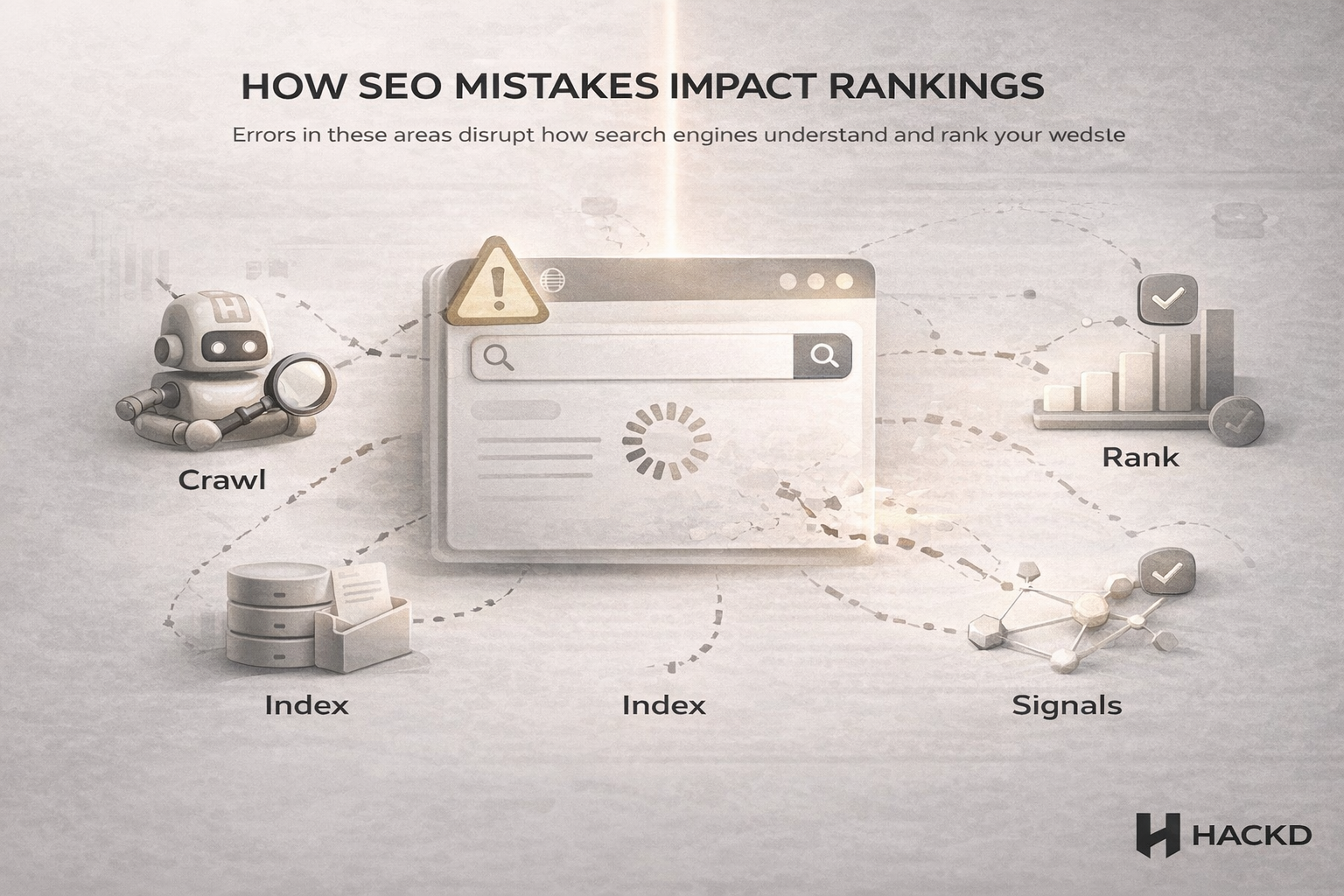
SEO mistakes are technical, content, or strategic errors that prevent search engines from properly crawling, indexing, and understanding your website. Without a clear data analysis framework, these issues are difficult to identify and prioritise effectively.
When left unresolved, these mistakes disrupt how your site communicates value to search engines. As a result, even well-written content can struggle to rank, making it harder to gain consistent traffic and maintain strong search performance.
Common SEO Mistakes That Are Killing Your Rankings
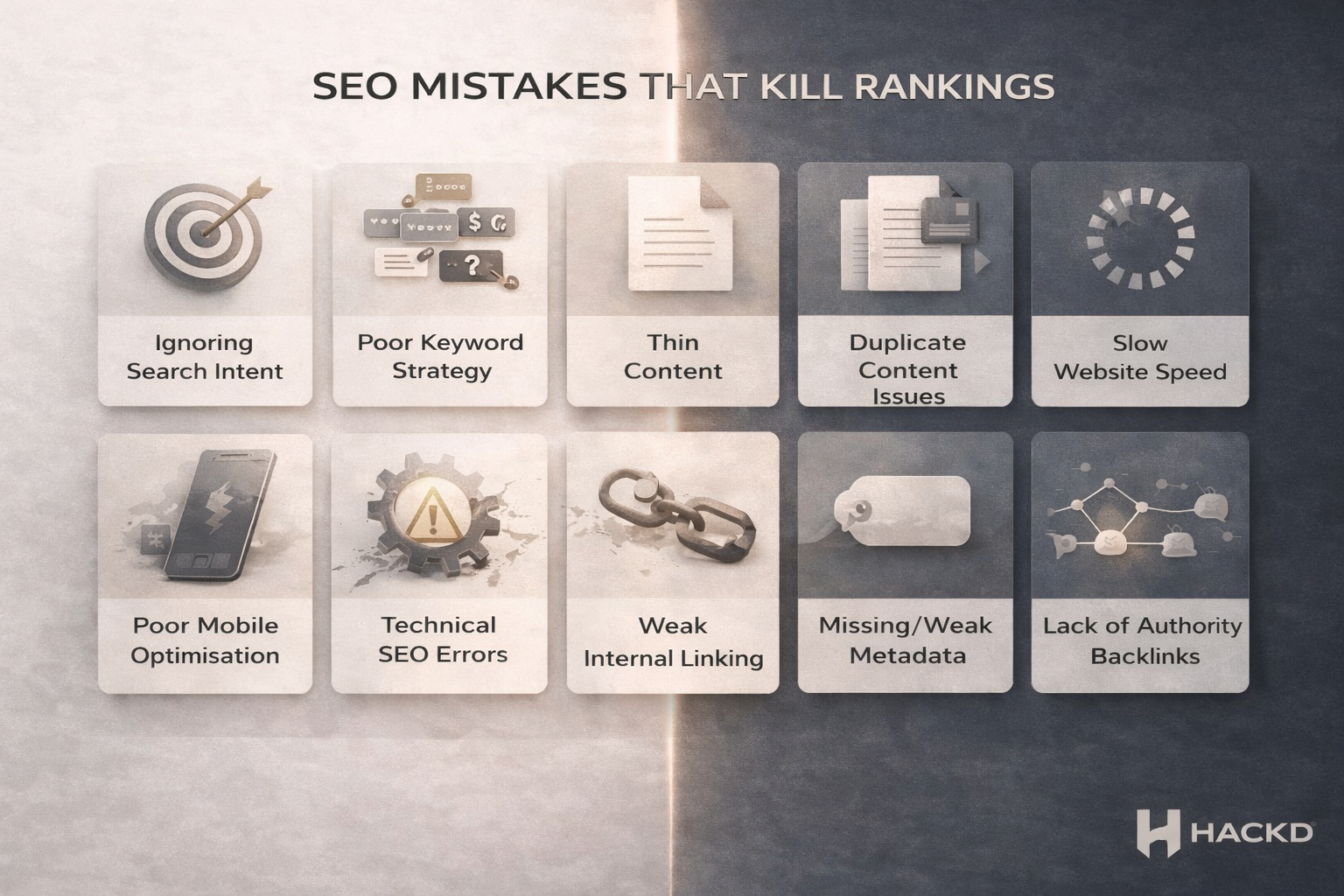
Identifying the mistakes affecting your SEO performance is the first step towards improving rankings. These issues often go unnoticed, yet they directly impact how search engines evaluate and position your website.
1. Ignoring Search Intent
Targeting keywords without aligning with user intent leads to content that fails to meet expectations. Search engines prioritise pages that directly satisfy queries, so mismatched intent reduces rankings and engagement. Even well-optimised content will struggle if it does not match what users want.
Traffic without intent alignment rarely converts or ranks sustainably.
2. Poor Keyword Strategy
Focusing on overly competitive, irrelevant, or low-intent keywords limits your ability to gain traction. Without a clear strategy, content attracts the wrong audience or none at all. A refined SEO & GEO approach ensures your keyword targeting reflects both intent and competitive opportunity.
Ranking for the wrong keywords delivers visibility without meaningful results.
3. Thin or Low-Quality Content
Content that lacks depth, clarity, or usefulness fails to compete in modern search results. Search engines reward comprehensive, well-structured content that fully answers user queries. Thin pages often lead to low engagement and reduced rankings.
If your content does not provide clear value, it will be outranked by more complete resources.
4. Duplicate Content Issues
Multiple pages targeting similar topics or repeating content create confusion for search engines. This dilutes ranking signals and makes it harder for the correct page to rank. Consolidation and clear differentiation are essential for stronger visibility.
Competing with your own content weakens your entire site’s authority.
5. No Content Updates or Freshness
Outdated content gradually loses relevance as search trends evolve. Search engines favour updated, accurate, and current information, especially for competitive queries. Without regular updates, rankings decline over time.
Content that is not maintained becomes invisible, regardless of past performance.
6. Slow Website Speed
Page speed directly impacts both user experience and rankings. Slow-loading pages increase bounce rates and reduce engagement, signalling poor performance to search engines. This limits your ability to compete effectively in search results.
Users leave before content loads, and search engines follow their behaviour.
7. Poor Mobile Optimisation
With mobile-first indexing, websites that do not perform well on mobile devices lose visibility. Poor responsiveness, layout issues, and slow mobile performance reduce engagement and rankings.
If your site fails on mobile, it fails in search.
8. Technical SEO Issues
Errors such as broken links, crawl issues, blocked pages, or missing sitemaps prevent search engines from accessing your content properly. When pages cannot be crawled or indexed, they cannot rank.
Invisible pages never generate traffic, no matter how well they are written.
9. Weak Internal Linking Structure
Without strong internal links, search engines struggle to understand how pages relate to each other. This reduces crawl efficiency and limits the distribution of authority across your site.
If your pages are not connected, their ranking potential remains isolated and limited.
10. Missing or Weak Metadata
Titles and meta descriptions help search engines understand content and influence click-through rates. Poorly written or missing metadata reduces visibility and user engagement in search results.
Even high-ranking pages lose traffic if they fail to attract clicks.
11. Lack of Authority and Backlinks
Backlinks signal trust and credibility to search engines. Without strong external links, it becomes difficult to compete in search results, especially in competitive niches. Authority plays a major role in determining rankings.
Without trust signals, even great content struggles to outperform competitors.
Addressing these mistakes transforms SEO from inconsistent effort into a structured system. Once these issues are resolved, your website becomes easier to crawl, more relevant to users, and better positioned to achieve sustainable ranking growth.
Quick Checklist to Identify SEO Mistakes
These signals help you quickly determine whether SEO mistakes are affecting your rankings and overall search performance. Reviewing them provides a clear starting point for improvement.
- Rankings have dropped or remain stagnant: Your pages are not improving in position, indicating underlying issues limiting growth.
- Pages are not indexed properly: Important pages are missing from search results due to crawl or indexing errors.
- High bounce rate on key pages: Users are leaving quickly, often due to poor relevance, slow speed, or weak user experience.
- Low engagement metrics: Short time on page and minimal interaction suggest content is not meeting user expectations.
- Traffic is declining despite ongoing efforts: Continued optimisation without results often points to unresolved technical or strategic issues.
How to Fix SEO Mistakes and Recover Your Rankings
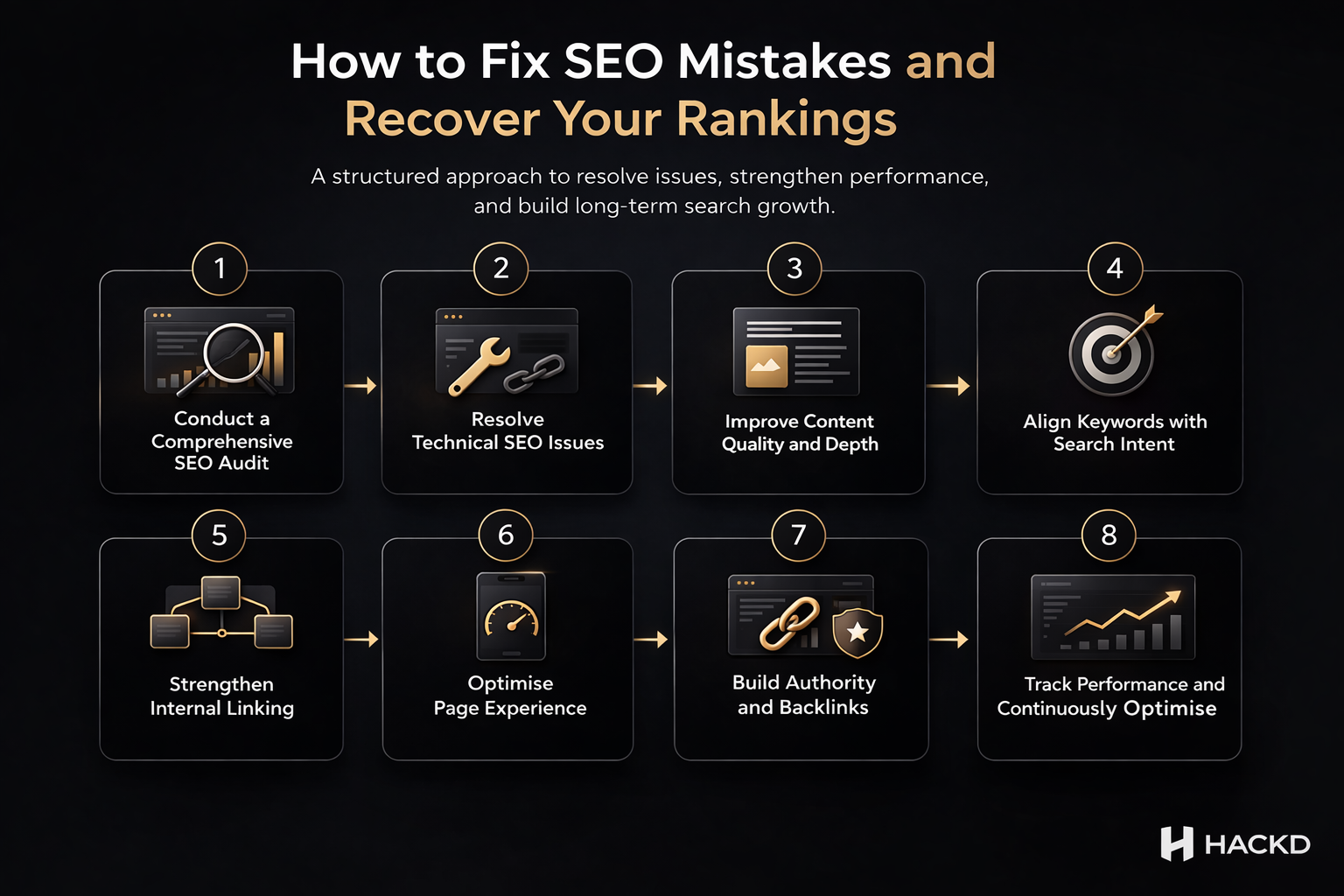
Fixing SEO mistakes requires a structured approach that addresses both technical issues and content performance. The goal is to restore search visibility while building a stronger foundation for long-term growth.
Step 1: Conduct a Comprehensive SEO Audit
Begin by analysing your website to identify technical, content, and structural issues. An audit provides a clear view of what is limiting performance, from crawl errors to content gaps.
Step 2: Resolve Technical SEO Issues
Fix problems that prevent search engines from accessing and indexing your site properly. This includes addressing broken links, improving site structure, updating sitemaps, and ensuring important pages are not blocked.
Step 3: Improve Content Quality and Depth
Enhance existing content to ensure it provides real value and fully addresses user queries. Expanding thin pages and refining messaging improves relevance and competitiveness in search results.
Step 4: Align Keywords with Search Intent
Re-evaluate your keyword strategy to ensure it reflects what users are actually searching for. Focus on intent-driven queries that match the purpose of each page.
Step 5: Strengthen Internal Linking
Create clear connections between pages to improve crawlability and guide both users and search engines through your site. This helps distribute authority and supports better rankings.
Step 6: Optimise Page Experience
Improve page speed, mobile usability, and overall user experience. A smooth, fast, and intuitive site encourages engagement and supports higher rankings.
Step 7: Build Authority and Backlinks
Develop a strategy to earn high-quality backlinks from credible sources. Strong authority signals increase trust and improve your ability to rank competitively.
Step 8: Track Performance and Continuously Optimise
Monitor rankings, traffic, and user behaviour to identify areas for improvement. SEO is an ongoing process, and continuous optimisation ensures sustained performance.
Why Small SEO Mistakes Have a Big Impact on Rankings
Small SEO mistakes often go unnoticed, yet they can significantly affect your website’s ability to rank. Unlike major issues that are easy to detect, minor errors tend to accumulate over time, creating a larger impact on overall performance.
Even simple technical issues such as broken links, slow page speed, or incorrect indexing settings can prevent search engines from properly accessing and evaluating your content. When these problems persist, they weaken your site’s visibility and reduce its chances of ranking competitively.
On the content side, small gaps in relevance, structure, or keyword alignment can make the difference between ranking on the first page or being pushed further down the results. Search engines prioritise precision, and even slight mismatches can affect performance.
Addressing these issues early ensures your SEO remains strong and consistent. When small mistakes are corrected, your website becomes easier to crawl, more relevant to search queries, and better positioned to achieve higher rankings.
Optimised SEO vs Broken SEO
The difference between strong rankings and poor performance often comes down to how well your SEO is structured and maintained. While both may appear similar on the surface, the underlying execution determines long-term results.
Maintaining optimised SEO ensures consistent visibility and growth, while unresolved issues in broken SEO continue to limit performance and prevent your website from reaching its full potential.
Which SEO Mistakes Should You Fix First?
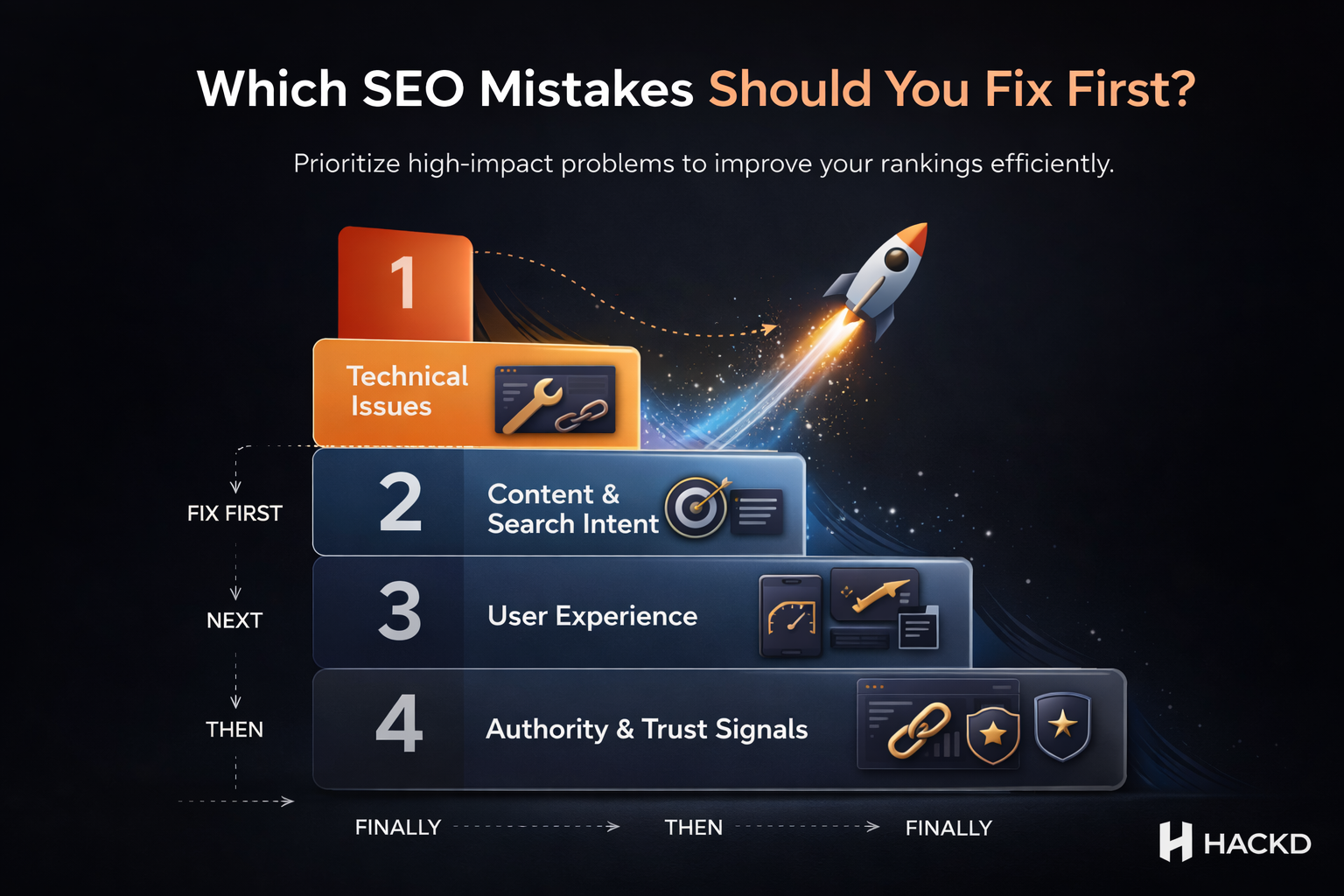
Not all SEO issues carry the same weight, and prioritising the right fixes is essential for improving rankings efficiently. Focusing on high-impact areas first ensures faster results and better use of resources.
Start with technical issues that affect crawlability and indexation. If search engines cannot access or understand your pages, no amount of content optimisation will improve rankings. Fixing errors such as broken links, blocked pages, and indexing issues should be the first priority.
Next, address content relevance and search intent. Pages that do not align with what users are searching for will struggle to rank, regardless of technical quality. Refining keyword targeting and improving content depth can significantly improve performance.
Then focus on user experience and on-page optimisation. Improving page speed, mobile usability, and navigation helps retain users and signals quality to search engines, supporting higher rankings.
Finally, work on authority building through backlinks and trust signals. While this is important, it becomes far more effective once the foundational elements of your SEO are already strong. Prioritising in this order creates a clear path to sustainable ranking improvements.
Fix the Mistakes That Are Holding Your Rankings Back
Most SEO strategies do not fail because of competition alone. They struggle because of overlooked issues that quietly limit performance and prevent your website from reaching its full potential.
At Hackd Growth, SEO is approached as a structured system where technical performance, content strategy, and user experience work together to drive measurable results. Identifying and fixing the right issues creates a strong foundation for consistent ranking growth.
If your rankings are not improving, the focus should be on refining what is already in place. When the key mistakes are addressed, SEO becomes more predictable, scalable, and aligned with long-term business outcomes.
Start by fixing what is holding your website back, and your rankings will begin to reflect the strength of your strategy.
FAQs
1. What are the most common SEO mistakes?
Common SEO mistakes include ignoring search intent, using poor keyword strategies, having thin content, weak internal linking, slow website performance, and unresolved technical issues.
2. Can SEO mistakes cause rankings to drop?
Yes, even small SEO mistakes can lead to ranking drops by affecting crawlability, relevance, and user experience, all of which are key ranking factors.
3. How long does it take to fix SEO issues?
The time varies depending on the severity of the issues, but noticeable improvements can often be seen within a few weeks to a few months after implementing fixes.
4. Do technical SEO issues really affect rankings?
Technical issues directly impact how search engines access and understand your site. If pages cannot be crawled or indexed properly, they cannot rank effectively.
5. How often should I audit my SEO?
Regular audits should be conducted every few months, or more frequently if your website is large or undergoing constant updates, to ensure ongoing performance and stability.
6. Can I fix SEO mistakes without professional help?
Some basic issues can be addressed independently, but complex technical or strategic problems often require expertise to resolve effectively and achieve long-term results.




.png)

.jpg)