Branding often gets reduced to visuals, logos, and colour palettes, but what a business shows is only part of the equation. What customers believe about that brand carries equal weight.
Brand identity and brand image sit at the centre of this distinction. One defines how a business presents itself, while the other reflects how it is actually perceived in the market.
Understanding the difference is essential for growth. When identity and image align, businesses build trust, improve conversions, and create a consistent foundation for long-term scalability.
What Is Brand Identity
Brand identity is the system a business creates to define how it wants to be perceived by its audience.
It brings together visual elements such as logos, colours, and typography with messaging, tone of voice, and positioning. More than design, it represents the intent behind the brand and how it communicates its value.
Every aspect of brand identity is controlled internally. Businesses decide how they show up, what they stand for, and how they differentiate in the market. This makes identity a strategic asset, not just a creative output.
When built properly, brand identity creates clarity and consistency. It ensures that every touchpoint communicates the same message, making it easier for customers to understand, trust, and engage with the brand.
What Is Brand Image
Brand image is the perception of a business in the minds of its audience, shaped by experiences, interactions, and external influence.
Unlike identity, brand image is not directly controlled. It is formed through customer experiences, reviews, word of mouth, and how the market interprets a brand’s messaging and delivery.
Every interaction contributes to this perception. From website experience to customer support and product quality, each touchpoint reinforces or weakens how the brand is seen.
Because of this, brand image is constantly evolving. Businesses that actively monitor feedback and align their delivery with their messaging are more likely to build a strong, positive perception over time.
Brand Identity vs Brand Image: Key Differences
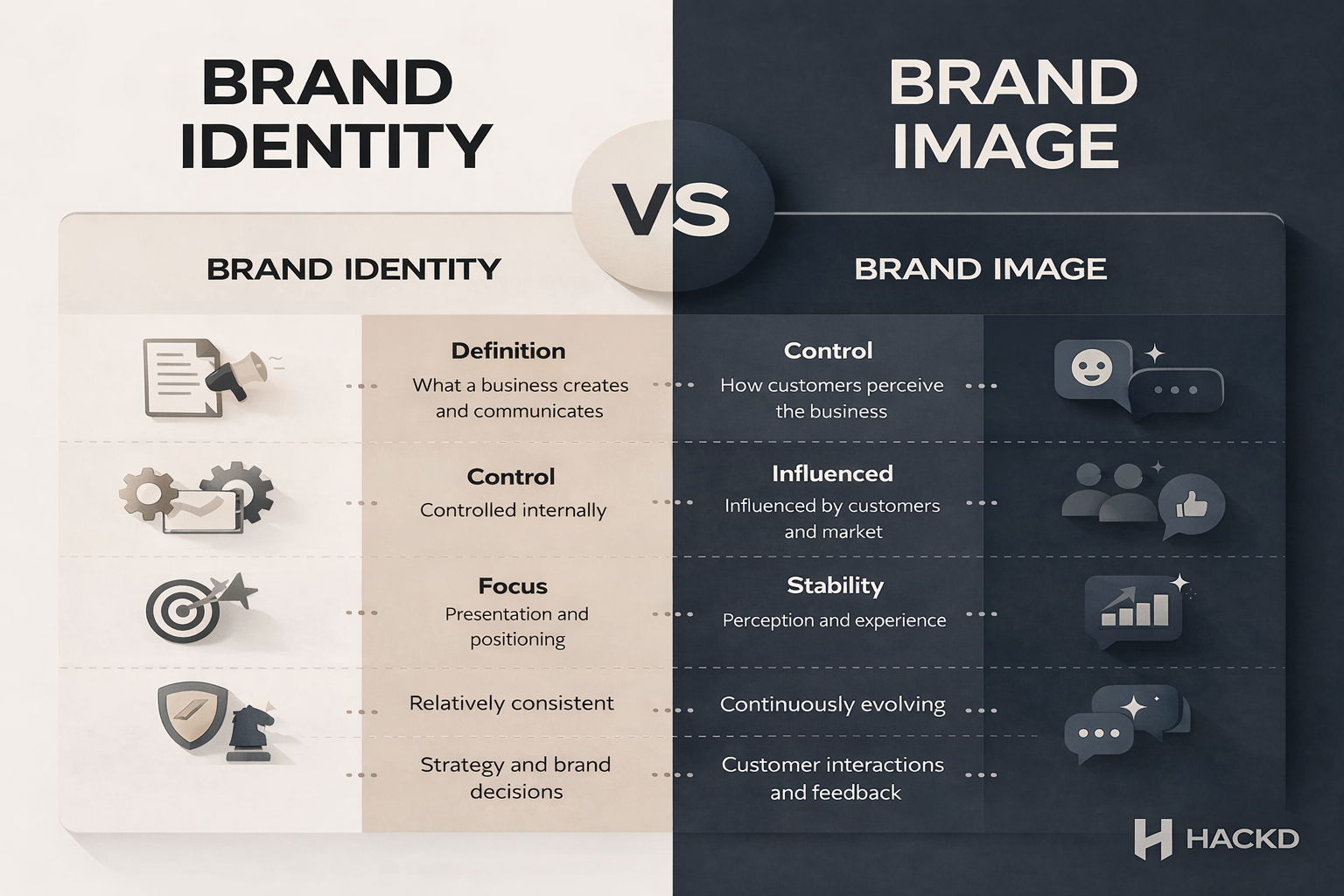
The difference between brand identity and brand image comes down to control, intent, and perception.
Brand identity is created internally. It defines how a business chooses to present itself through visuals, messaging, and positioning. Brand image, on the other hand, is formed externally based on how customers interpret and experience that presentation.
This distinction creates a critical dynamic. Identity sets expectations, while image reflects whether those expectations are met. When there is alignment, trust builds. When there is a gap, confusion and scepticism follow.
To make this clearer, here is a direct comparison:
Understanding these differences allows businesses to diagnose branding issues more effectively and build strategies that align both sides of the brand system.
Why the Difference Matters for Business Growth
The gap between brand identity and brand image directly impacts how a business performs in the market.
When both are aligned, customers experience exactly what the brand promises. This creates trust, reduces friction in decision making, and increases the likelihood of conversion. Consistency across messaging and experience makes the brand easier to understand and remember.
However, when there is a disconnect, performance drops. A business may present itself as premium, innovative, or reliable, but if the actual experience does not support that message, customers hesitate. This hesitation leads to lower conversions and weaker retention.
Over time, this misalignment compounds. Marketing efforts become less effective, customer acquisition costs increase, and brand credibility weakens. On the other hand, businesses that align identity and image build stronger authority, attract better-fit customers, and scale with greater efficiency.
How Brand Identity and Brand Image Work Together
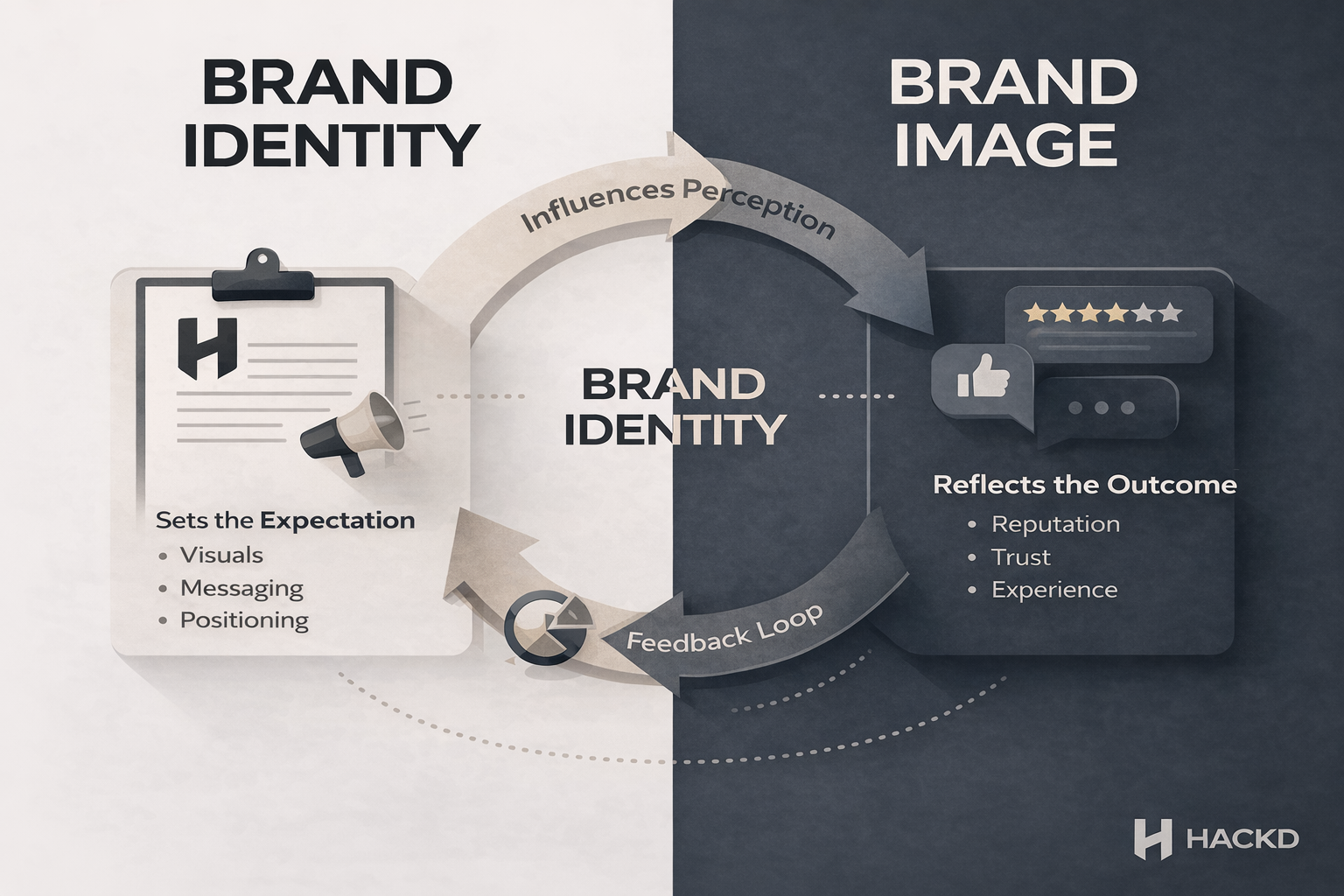
Brand identity and brand image operate as a continuous feedback system that shapes how a business grows over time.
Brand identity sets the expectation. It communicates what the business promises through its visuals, messaging, and positioning. This is the standard customers use to evaluate their experience.
Brand image reflects the outcome of that promise. Every interaction, from first impression to post-purchase experience, determines whether the brand delivers on what it claims.
When expectations are met or exceeded, perception strengthens. Customers begin to associate the brand with reliability and consistency. When expectations fall short, the image weakens and trust declines.
Over time, this creates a loop. Brand identity influences perception, and perception feeds back into how the brand evolves. Businesses that actively manage both sides are
Common Mistakes Businesses Make
Misalignment between brand identity and brand image often comes from avoidable strategic and execution errors.
Many businesses focus heavily on visuals without defining a clear positioning strategy. A strong logo or polished design may look impressive, but without a clear message behind it, the brand lacks direction and fails to connect with the right audience.
Another common issue is ignoring customer perception. Businesses often assume their messaging is being received as intended, without actively monitoring feedback, reviews, or user behaviour. This creates a blind spot that allows negative perceptions to grow unnoticed.
Inconsistency across touchpoints also weakens brand strength. When messaging, tone, or experience varies between platforms, customers struggle to form a clear understanding of the brand.
Finally, one of the most damaging mistakes is overpromising and underdelivering. When the experience does not match the expectation set by the brand identity, trust breaks down quickly, making it difficult to recover credibility.
How to Align Brand Identity and Brand Image
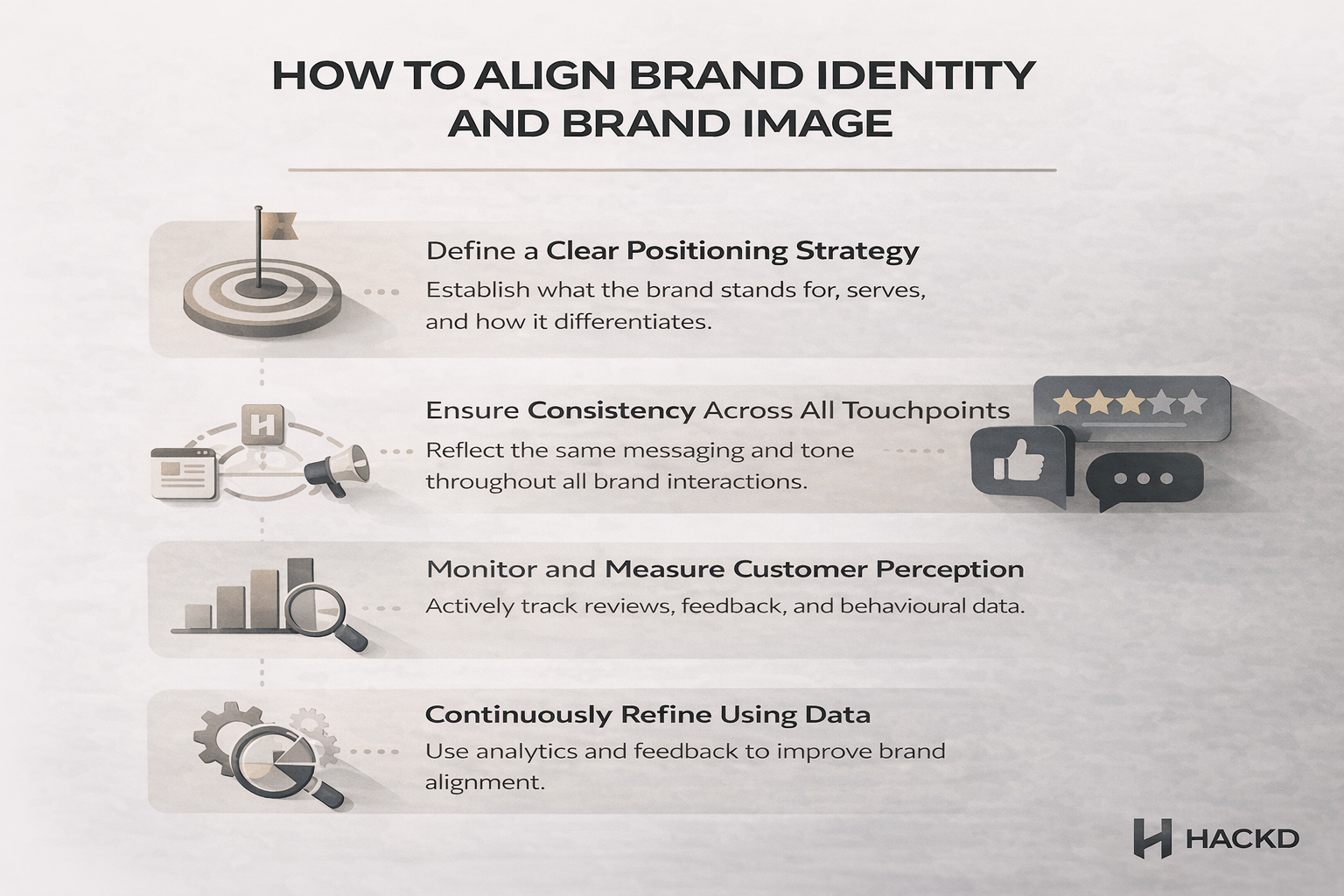
Aligning brand identity and brand image requires a deliberate, system-driven approach across strategy, execution, and continuous optimisation.
1. Define a Clear Positioning Strategy
Start by establishing what the brand stands for, who it serves, and how it differentiates in the market. This clarity ensures that identity is built on a strategic foundation rather than surface-level design.
2. Ensure Consistency Across All Touchpoints
Every interaction, from website experience to customer support and marketing campaigns, should reflect the same messaging and tone. Consistency reinforces recognition and builds trust over time.
3. Monitor and Measure Customer Perception
Actively track reviews, feedback, and behavioural data to understand how the brand is perceived. This provides real insight into whether identity and image are aligned.
4.Close the Gap Between Promise and Experience
Evaluate whether the actual customer experience matches what is communicated. If there is a gap, adjust either the messaging or the delivery to restore alignment.
5. Continuously Refine Using Data
Use insights from analytics and customer feedback to improve both identity and experience. Alignment is not a one-time task but an ongoing process that evolves with the business.
Real-World Example
A clear gap between brand identity and brand image can directly impact trust, conversions, and long-term growth.
Consider a business that positions itself as a premium service provider. Its brand identity includes refined visuals, confident messaging, and a strong emphasis on quality and reliability.
However, the actual experience tells a different story. Response times are slow, communication is inconsistent, and delivery lacks attention to detail. Customers begin to question the brand’s credibility.
In this case, the identity promises premium, but the image reflects inconsistency. This mismatch creates hesitation during the buying process and reduces repeat engagement.
When the experience is improved to match the promise, perception shifts. Customers begin to associate the brand with reliability, and trust strengthens, leading to better conversion and retention.
Understanding the Difference for Stronger Brand Growth
Brand identity defines how a business presents itself, while brand image reflects how it is perceived. Both must work together to create clarity, trust, and consistency in the market.
When identity and image are aligned, customers experience what the brand promises. This strengthens credibility, improves conversion, and supports long-term growth.
Businesses that understand and act on this difference are better positioned to scale. Align the message with the experience, and the results follow.
FAQs
1. What is the main difference between brand identity and brand image
Brand identity is what a business creates and controls, including its visuals, messaging, and positioning. Brand image is how customers perceive the business based on their experiences, interactions, and external influences.
2. Can a business control its brand image
A business cannot directly control its brand image, but it can influence it. Consistent messaging, strong customer experience, and reliable delivery help shape how customers perceive the brand over time.
3. Why is brand identity important for a business
Brand identity creates clarity and consistency. It helps businesses communicate their value, differentiate from competitors, and attract the right audience.
4. Why does brand image matter for growth
Brand image influences trust, credibility, and purchasing decisions. A positive perception increases conversions and customer retention, while a negative one can limit growth.
5. How can businesses align brand identity and brand image
Businesses can align both by ensuring their messaging matches customer experience, maintaining consistency across all touchpoints, and regularly monitoring feedback to adjust and improve.