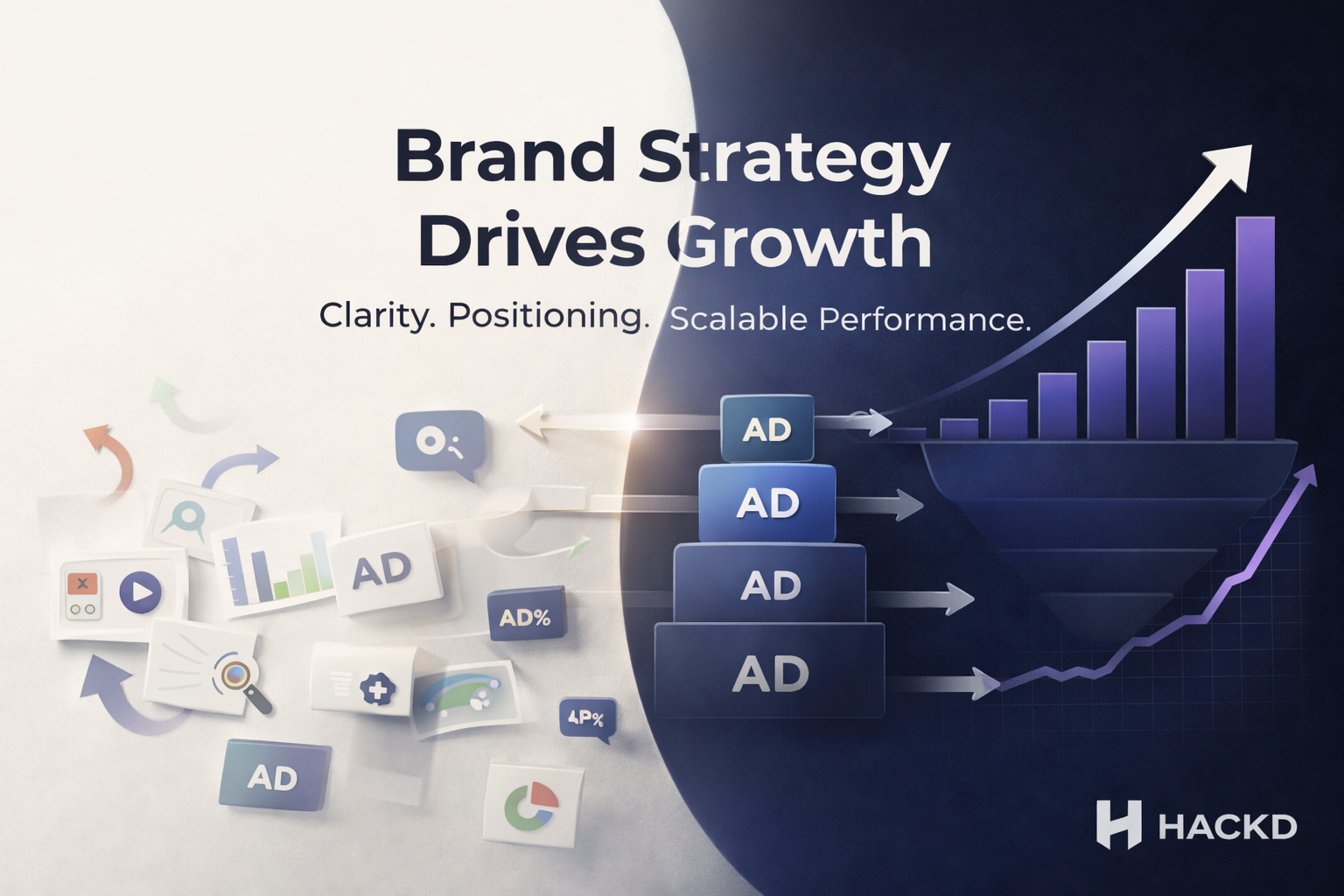
Most businesses invest heavily in marketing campaigns, ads, and content, yet struggle to see consistent results. The issue is rarely execution. It often comes down to a lack of clear direction behind those efforts. Without a defined strategy, even the best marketing activities fail to create lasting impact.
Brand strategy provides that direction. It defines how a business positions itself, communicates value, and builds recognition in a crowded market. Rather than relying on short-term tactics, it creates a foundation that supports sustainable growth.
For modern businesses, brand strategy is not optional. It shapes how customers perceive you, influences buying decisions, and directly impacts how efficiently your marketing performs over time.
What Is Brand Strategy
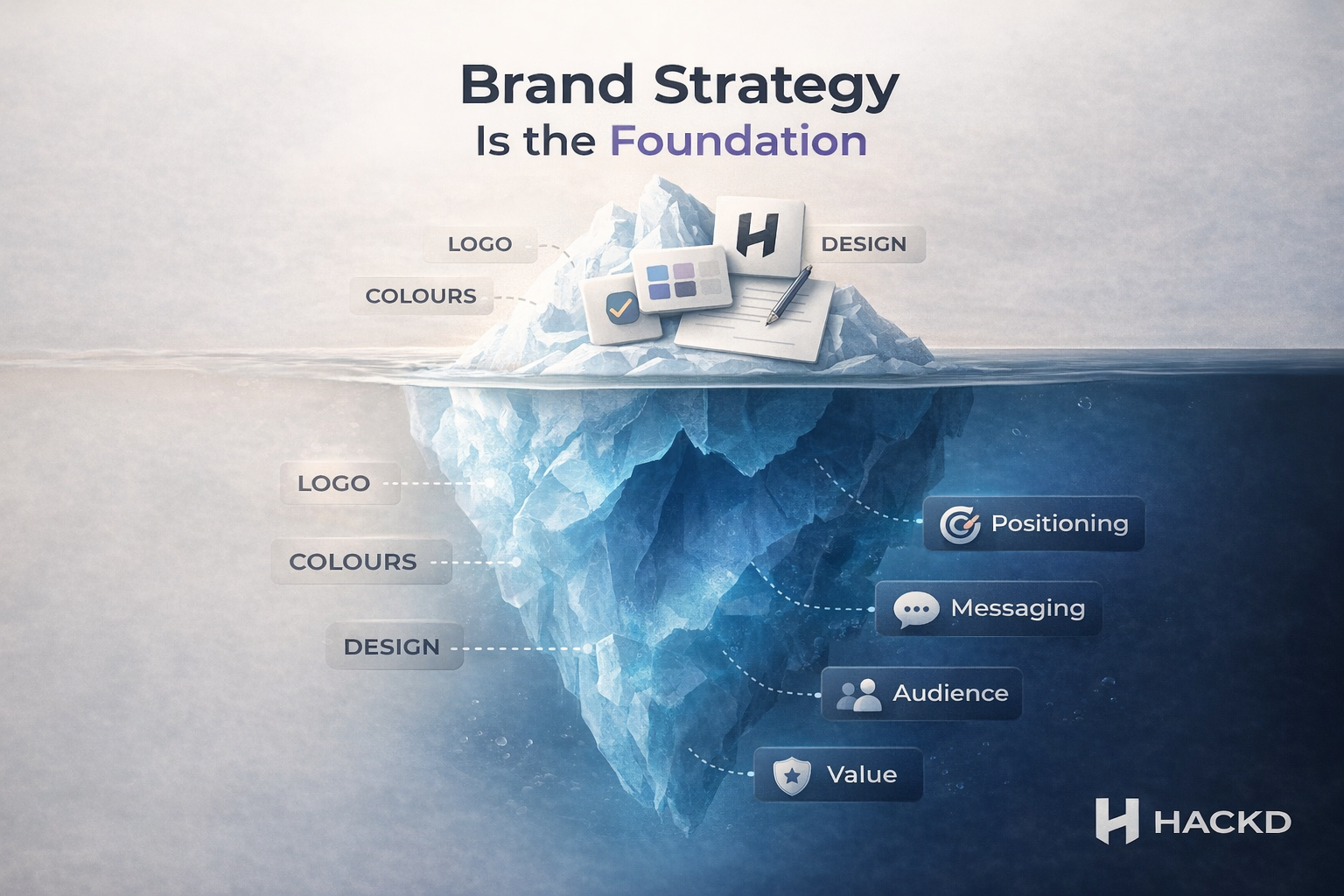
Brand strategy is the structured approach a business uses to define how it is perceived in the market. It goes beyond visuals or logos and focuses on positioning, messaging, and the overall experience delivered to customers. At its core, it answers a simple question: why should someone choose your business over others?
A strong brand strategy connects your business goals with customer expectations. It defines who you serve, what you stand for, and how you communicate your value consistently across every touchpoint. This clarity ensures that your marketing, sales, and product efforts all move in the same direction.
It is important to distinguish brand strategy from branding. Branding includes elements such as logos, colours, and design systems. Brand strategy, on the other hand, is the thinking behind those elements. It guides every decision, ensuring that what you present externally aligns with your positioning internally.
When executed correctly, brand strategy creates consistency, builds trust, and strengthens recognition. Over time, this translates into stronger customer relationships and a clearer path to growth.
Why Brand Strategy Matters for Business Growth
Growth becomes difficult when a business lacks clear positioning. Without it, marketing messages feel generic, campaigns fail to stand out, and potential customers struggle to understand the real value being offered. Brand strategy removes this ambiguity by creating a focused and differentiated presence in the market.
A well-defined brand strategy improves how efficiently you acquire customers. Clear messaging attracts the right audience, reduces friction in decision-making, and increases conversion rates across channels. Instead of trying to appeal to everyone, your efforts become targeted and more effective.
Consistency is another major driver of growth. When your brand communicates the same message across every touchpoint, it builds familiarity and trust. Over time, this reduces reliance on constant advertising and allows your reputation to support ongoing demand.
Strong brand strategy also creates long-term advantages. It positions your business in a way that competitors cannot easily replicate, strengthens customer loyalty, and supports premium pricing. As a result, growth becomes more sustainable, predictable, and scalable.
Core Elements of a Strong Brand Strategy
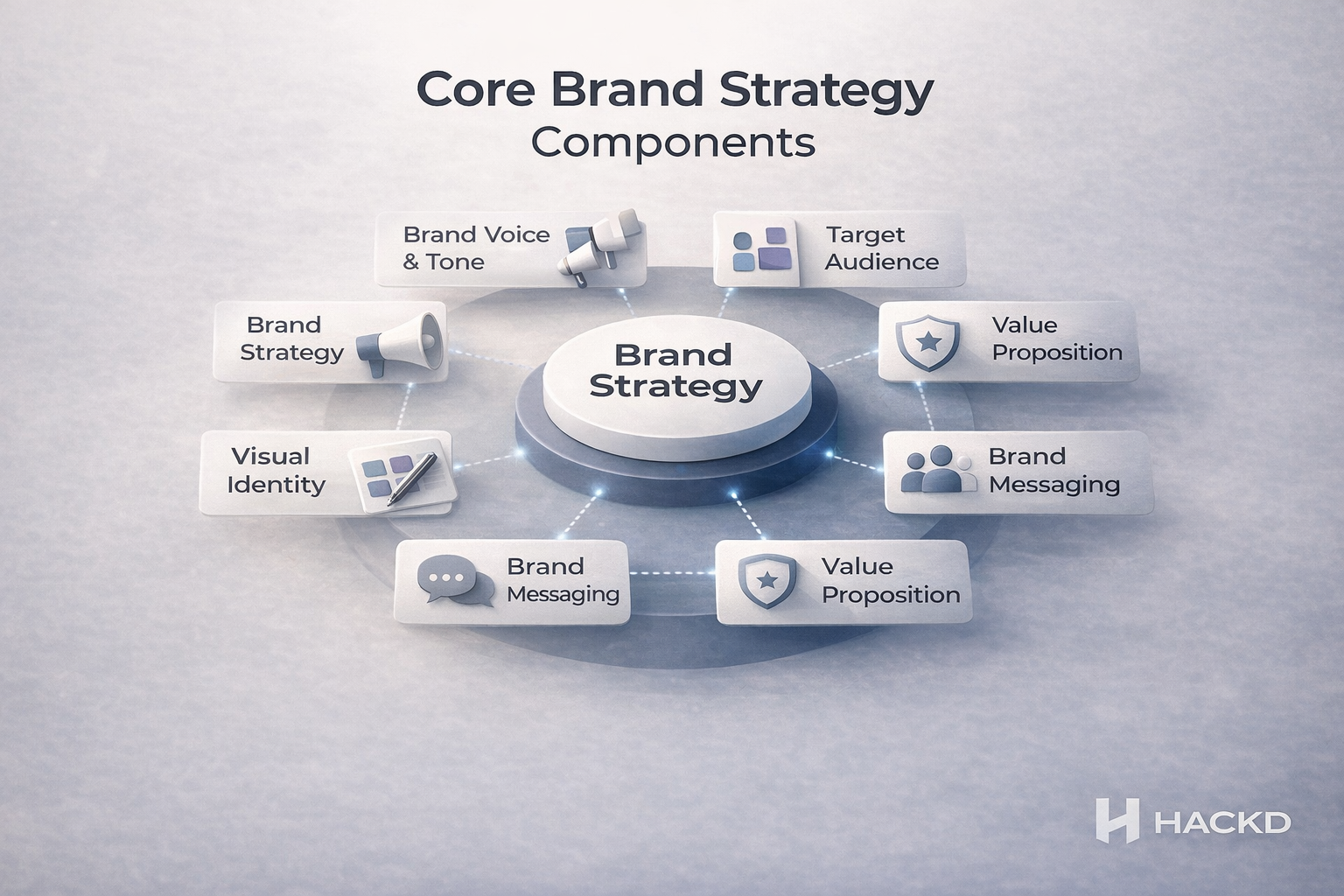
A strong brand strategy is built on clearly defined components that work together to shape how a business is understood, remembered, and chosen. When these elements are aligned, they create consistency and direction across every customer interaction.
- Brand Positioning: Defines where your business sits in the market and how it is differentiated from competitors. Strong positioning clarifies who you serve, what makes you different, and why that difference matters in real buying decisions.
- Target Audience Definition: Identifies the specific group of people your business is built for. This goes beyond demographics to include needs, behaviours, and motivations, ensuring your messaging speaks directly to the right customers.
- Value Proposition: Communicates the core benefit your business delivers. It explains the outcome customers can expect and why your solution is the best choice compared to alternatives available in the market.
- Brand Messaging: Establishes how your business communicates its value. This includes key messages, tone, and language used across marketing, ensuring consistency and clarity in every interaction.
- Visual Identity Alignment: Ensures that design elements such as logos, colours, and typography reflect your positioning. Visual consistency strengthens recognition and reinforces the overall brand perception.
- Brand Voice and Tone: Defines how your brand sounds when it communicates. A consistent voice builds familiarity, strengthens trust, and helps create a distinct personality that customers can connect with over time.
How Brand Strategy Influences Marketing Performance
Strong Positioning Improves Conversion Rates
Clear positioning removes uncertainty for potential customers. When people immediately understand who you are and what you offer, they are more likely to take action. This reduces hesitation, shortens the decision-making process, and increases conversion rates across landing pages, ads, and sales funnels.
Consistent Messaging Builds Trust Faster
Consistency across channels reinforces credibility. When your website, ads, and content all communicate the same message, it creates familiarity. Over time, this consistency builds trust, making it easier for customers to choose your business over competitors that appear fragmented or unclear.
Clear Identity Reduces Customer Acquisition Costs
A well-defined brand attracts the right audience more efficiently. Instead of spending heavily to convince broad audiences, your messaging naturally resonates with those already aligned with your offer. This improves targeting performance and lowers the overall cost of acquiring new customers.
Alignment Across Channels Increases Efficiency
When your brand strategy guides all marketing efforts, teams operate with clarity. Campaigns become more cohesive, content becomes more relevant, and execution becomes faster. This alignment reduces wasted effort and ensures that every activity contributes to measurable growth.
Brand Strategy vs Branding vs Marketing
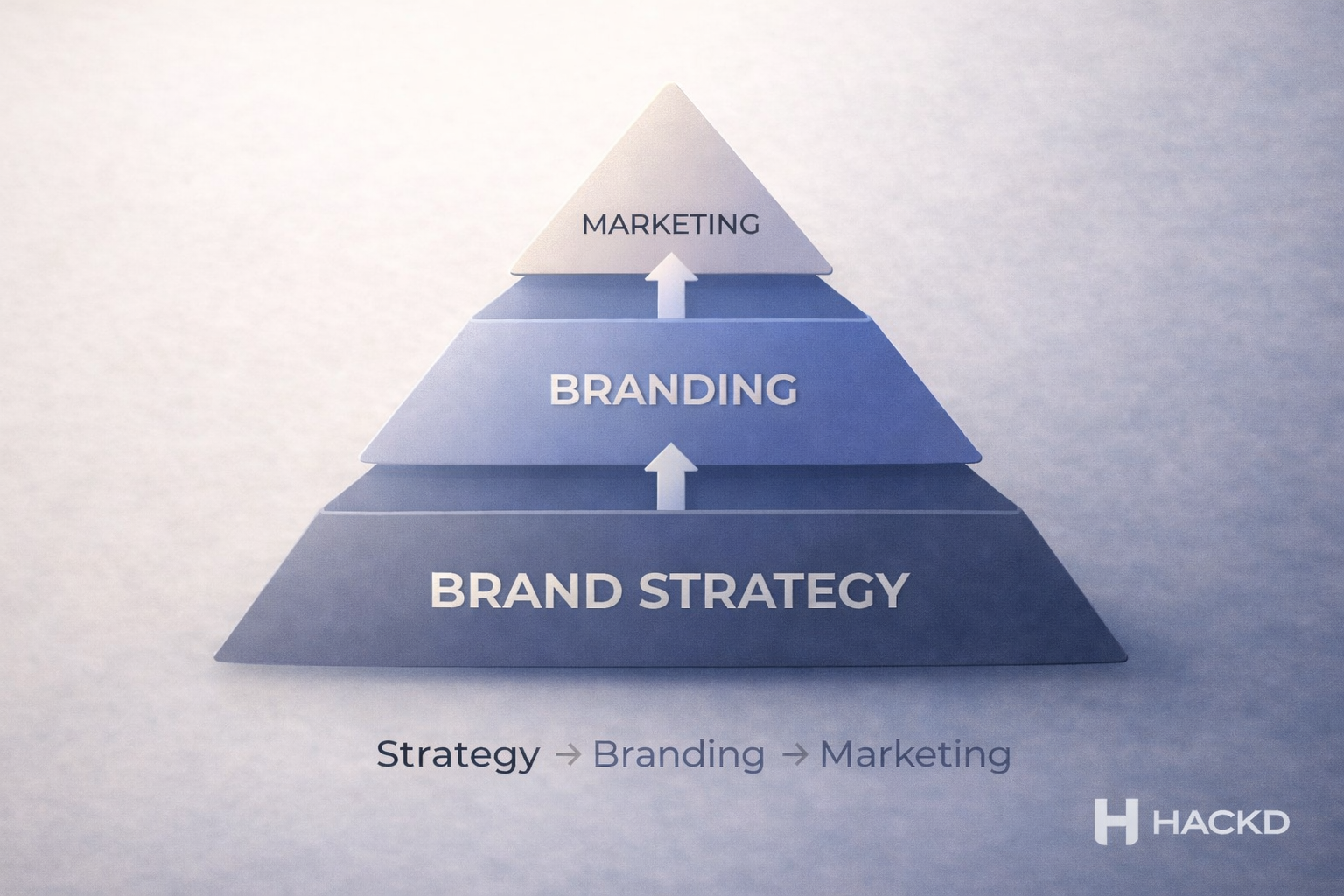
Brand strategy, branding, and marketing are often used interchangeably, yet they serve very different roles within a business. Understanding the distinction is essential for building a system that actually drives growth rather than disconnected activities.
Brand strategy sits at the foundation. It defines your positioning, target audience, value proposition, and messaging. This is where key decisions are made about how your business should be perceived and why customers should choose you. Without this layer, everything else lacks direction.
Branding is the expression of that strategy. It includes visual identity, tone of voice, and design systems that bring your strategy to life. While branding makes your business recognisable, it is guided by the strategic thinking behind it.
Marketing is the execution layer. It involves the channels, campaigns, and tactics used to reach your audience and generate demand. Marketing drives traffic and engagement, but its effectiveness depends heavily on how strong and clear your brand strategy is.
When these three elements are aligned, businesses create a cohesive system where strategy informs branding, and branding strengthens marketing performance.
Common Mistakes Businesses Make with Brand Strategy
Many businesses struggle with brand strategy not because they ignore it, but because they approach it incorrectly. These mistakes often lead to weak positioning, inconsistent messaging, and underperforming marketing efforts.
- Confusing branding with logo design: Focusing only on visuals creates a surface-level identity. Without clear positioning and messaging behind it, the brand lacks meaning and fails to influence real buying decisions.
- Lack of clear positioning: Trying to appeal to everyone results in a diluted message. Without a defined place in the market, businesses struggle to stand out or communicate why they are the better choice.
- Inconsistent messaging: Changing tone, value propositions, or messaging across channels creates confusion. This weakens trust and makes it harder for customers to recognise and remember the brand.
- Ignoring target audience clarity: Speaking to a broad or undefined audience leads to generic communication. Without understanding customer needs and behaviours, messaging fails to resonate or drive engagement.
- Treating brand as a one-time activity: Building a brand is not a one-off task. Markets evolve, and customer expectations change, requiring continuous refinement to stay relevant and competitive.
How to Build an Effective Brand Strategy

Building a strong brand strategy requires deliberate thinking, not guesswork. When done correctly, it creates clarity across your business and ensures every decision supports long-term growth.
1. Define Your Market Position
Start by identifying where your business fits within the market. Analyse competitors, gaps, and opportunities to determine how you can stand out. A clear position helps customers quickly understand what makes your offer different and why it is relevant to them.
2. Understand Your Ideal Customer
Deep knowledge of your audience is essential. Go beyond basic demographics and focus on their needs, behaviours, and decision drivers. This allows you to craft messaging that speaks directly to their problems and aligns with what they value most.
3. Develop a Clear Value Proposition
Your value proposition should communicate the outcome customers can expect. It needs to be specific, relevant, and easy to understand. When this is clear, it becomes easier to align marketing efforts and guide customer decisions effectively.
4. Create Consistent Messaging
Establish key messages that remain consistent across all channels. This includes how you talk about your product, benefits, and positioning. Consistency strengthens recognition and ensures your communication remains clear regardless of where customers encounter your brand.
5. Align Brand with Business Goals
Your brand strategy should support broader business objectives. Whether the goal is growth, market expansion, or premium positioning, your brand must reflect and reinforce that direction. Alignment ensures that strategy and execution work together to drive measurable outcomes.
Real-World Examples of Brand Strategy in Action
Brand strategy becomes more effective when applied to real business scenarios. These examples show how positioning and messaging directly influence how customers perceive and choose a brand.
A premium brand positions itself around quality, exclusivity, and experience. Pricing is higher, messaging focuses on craftsmanship or results, and the overall perception justifies the cost. This approach attracts customers who prioritise value over price and are willing to pay more for it.
A budget-focused brand takes a different route. It emphasises affordability, accessibility, and practicality. Messaging is straightforward, and the goal is to appeal to price-sensitive customers who want reliable solutions without unnecessary extras.
Niche brands often focus on a specific audience segment. By tailoring their messaging and offering to a clearly defined group, they build stronger relevance and loyalty. This makes it easier to compete, even in crowded markets.
Some businesses create entirely new categories. Instead of competing directly, they position themselves differently enough to redefine how customers view the problem. This reduces direct competition and allows the brand to lead rather than follow.
The Role of Brand Strategy in Long-Term Growth
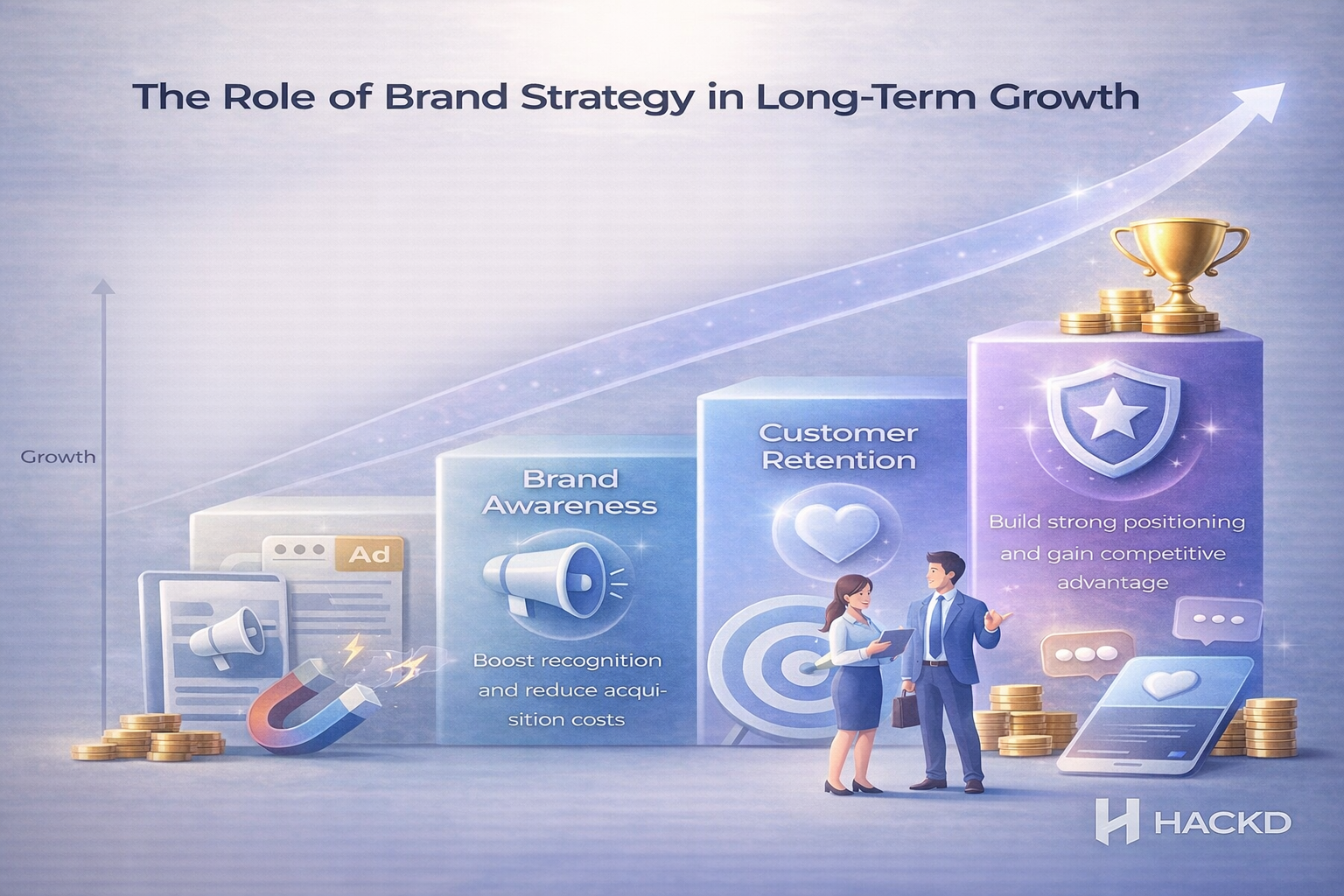
Short-term marketing can generate quick results, but sustainable growth depends on how a brand is positioned over time. Brand strategy creates a foundation that allows businesses to build recognition, trust, and preference consistently.
As brand awareness increases, customer acquisition becomes more efficient. People begin to recognise your business, understand your value, and require less persuasion before making a decision. This reduces dependency on constant advertising and lowers overall acquisition costs.
Strong brand strategy also supports customer retention. When customers clearly understand what your brand stands for and consistently experience that promise, loyalty strengthens. This leads to repeat purchases, referrals, and long-term relationships that compound over time.
Over the long term, brand equity becomes a competitive advantage. Businesses with strong positioning can command higher prices, enter new markets more easily, and maintain relevance even as competition increases. Growth becomes more predictable and less reliant on short-term tactics.
Building a Brand That Drives Sustainable Growth
Brand strategy only works when it moves beyond theory and starts influencing real business outcomes. Clear positioning should shape how you acquire customers, how you communicate value, and how efficiently your marketing performs across channels.
When a brand is properly aligned, decisions become easier. Messaging stays consistent, targeting improves, and performance becomes more predictable. Instead of constantly adjusting tactics, the business operates from a clear strategic foundation that supports growth over time.
At Hackd Growth, brand strategy is not treated as a standalone exercise. It is built into a broader growth system where positioning, data, and marketing execution work together. This ensures your brand does not just look right, but performs where it matters most.
If your brand is not translating into stronger conversions or clearer market positioning, it is likely a strategy gap. Reach out to us at Hackd Growth to align your brand with a system designed to drive measurable and scalable business growth.
FAQs
1. What is brand strategy in simple terms?
Brand strategy is the plan that defines how a business is positioned, communicated, and perceived in the market. It guides messaging, targeting, and overall direction to ensure consistency and clarity.
2. Why is brand strategy important for businesses?
It helps businesses stand out, attract the right audience, and build trust. A clear strategy improves marketing performance and supports long-term growth by creating consistency across all touchpoints.
3. What are the key elements of brand strategy?
Key elements include positioning, target audience, value proposition, messaging, visual identity, and brand voice. Together, these define how a business presents itself and communicates value.
4. How is brand strategy different from branding?
Brand strategy is the foundation that defines direction and positioning, while branding is the visual and verbal expression of that strategy, including design and communication style.
5. Can small businesses benefit from brand strategy?
Yes. Even small businesses gain clarity, improve marketing efficiency, and compete more effectively when they have a defined brand strategy guiding their decisions.
6. How long does it take to develop a brand strategy?
The timeline varies depending on the business, but a well-developed strategy requires research, analysis, and alignment. It is not a one-time task and should evolve as the business grows.