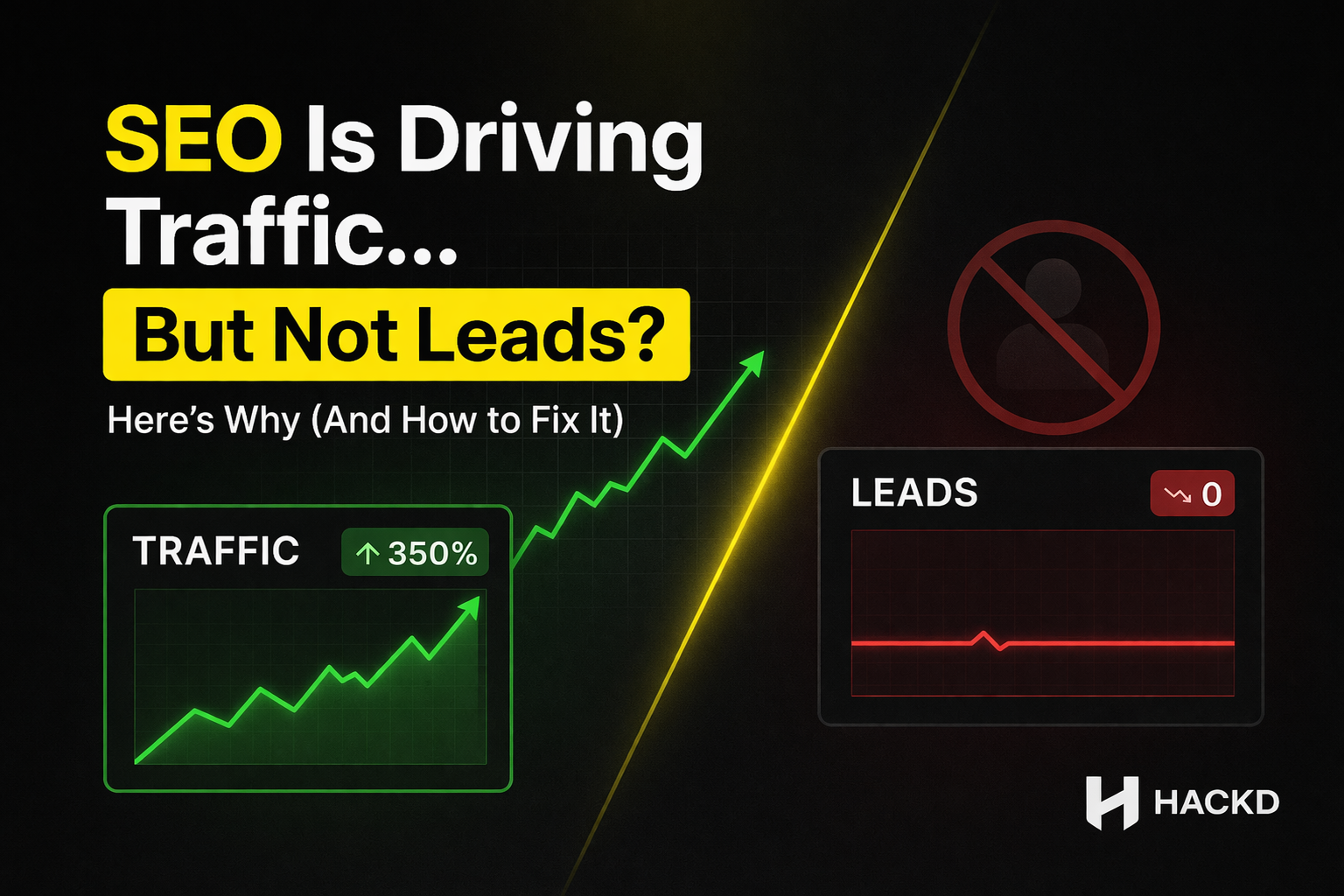
Seeing your website rank on search engines should feel like progress. Yet for many businesses, those rankings bring traffic without any real enquiries, leads, or revenue. The disconnect between visibility and results is where most SEO strategies fall short.
What often gets overlooked is that SEO alone does not generate leads. Driving visitors to your site is only one part of the equation, and without a clear path to conversion, that traffic rarely translates into business growth.
To generate consistent leads, SEO needs to function as a structured system. That means aligning search intent, content, and conversion strategy so that every visitor is guided towards taking meaningful action.
What Does It Mean When SEO Fails to Generate Leads?
SEO fails to generate leads when a website attracts traffic but does not convert visitors into enquiries, sign-ups, or customers. This usually happens when there is a misalignment between search intent, content relevance, and the conversion path, leaving users without a clear next step or reason to take action.
Why Your SEO Is Not Generating Leads
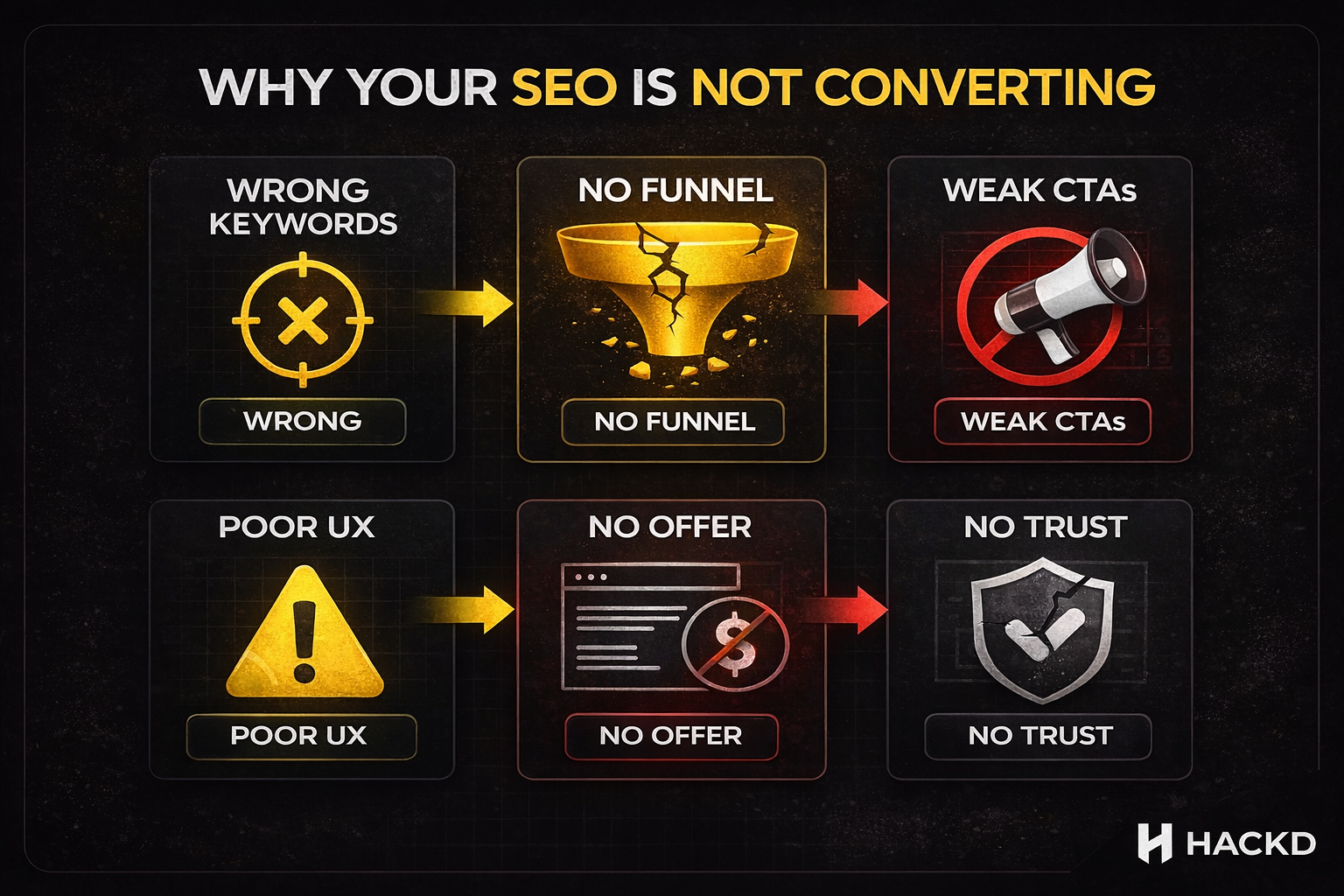
Understanding the root cause of poor lead generation is essential before making any changes. In most cases, the issue is not a lack of traffic, but a breakdown in how that traffic is being targeted, guided, and converted.
1. You Are Targeting Traffic Instead of Buyer Intent
Many SEO strategies prioritise high-volume keywords without considering whether those searches indicate real buying intent. Informational queries may bring large amounts of traffic, but they rarely convert into leads if users are still in the early research stage. Without targeting commercial or decision-driven keywords, the traffic you attract is unlikely to take action.
2. Your Content Does Not Match the Customer Journey
Content that is not aligned with the customer journey creates gaps between interest and action. If your website only offers awareness-stage content without supporting consideration or decision-stage pages, users have no clear progression. This lack of structure prevents visitors from moving naturally towards becoming leads.
3. Weak or Missing Conversion Paths
Even well-optimised content fails if there is no clear way for users to convert. Missing or poorly placed calls to action, lack of landing pages, and weak internal linking all contribute to lost opportunities. Visitors may engage with your content but leave without taking the next step simply because it is not obvious.
4. Poor On-Page Experience and User Journey
A slow, cluttered, or confusing website reduces the likelihood of conversion. If users struggle to navigate your pages, find information, or trust the experience, they will exit before taking action. User experience plays a direct role in whether SEO traffic turns into leads.
5. No Clear Offer or Value Proposition
If your website does not clearly communicate what you offer and why it matters, visitors will not convert. Even with strong traffic, unclear messaging creates hesitation. Users need to immediately understand the value you provide and what action they should take next.
6. Lack of Trust and Authority Signals
Trust is a key factor in lead generation. Without testimonials, case studies, or evidence of results, users have little reason to engage further. SEO may bring visitors to your site, but without credibility, those visitors are unlikely to convert into leads.
7. SEO and CRO Are Not Working Together
SEO and conversion rate optimisation must work as a unified system. When these two areas are treated separately, traffic increases but conversions remain low. Without aligning acquisition with conversion strategy, SEO efforts fail to deliver meaningful business outcomes.
Quick Checklist to Identify Why Your SEO Is Not Converting
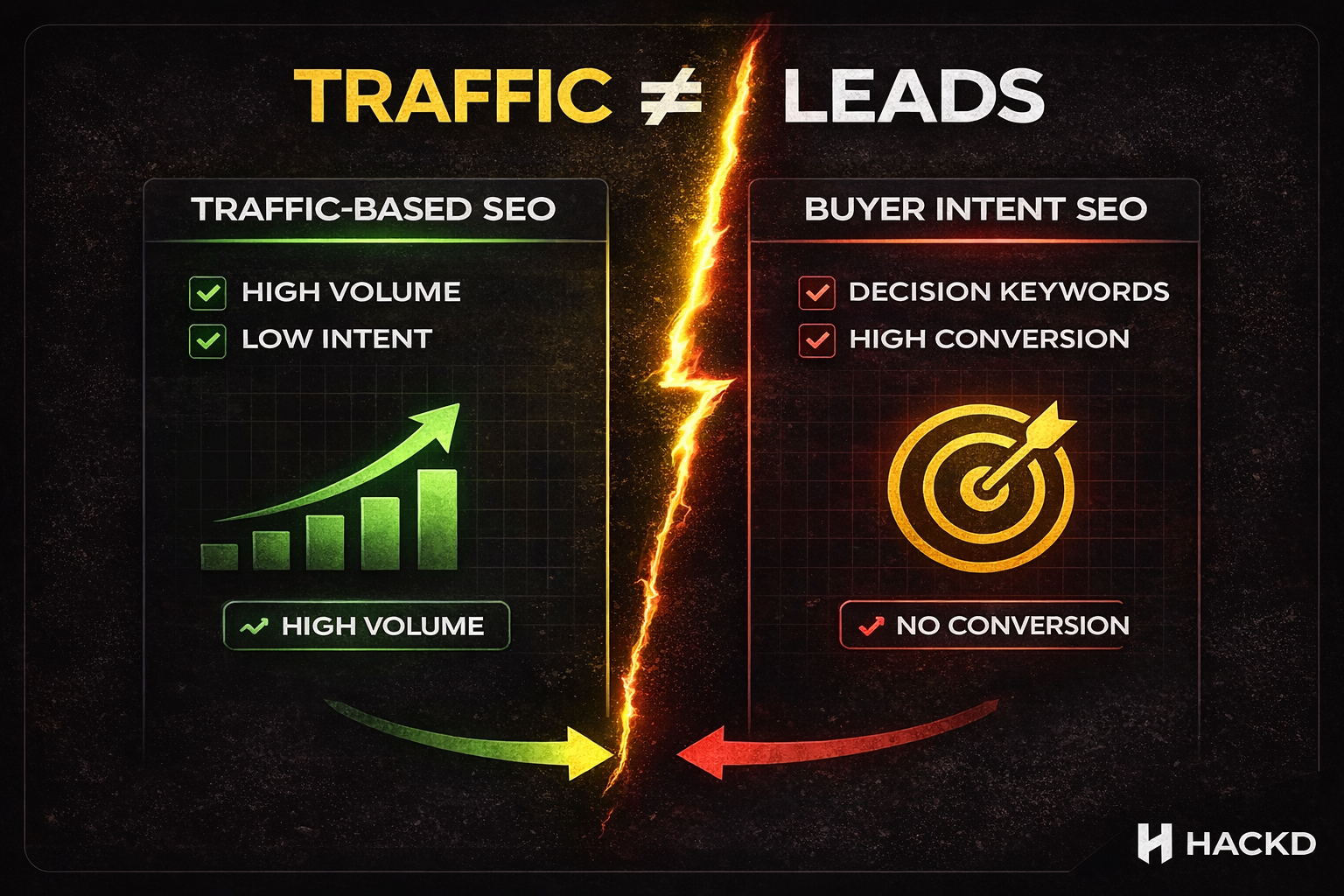
These signals quickly reveal whether your SEO is driving traffic but failing to generate meaningful leads. Reviewing them helps identify where the breakdown is happening in your strategy.
- High traffic with low enquiries: Visitors are reaching your site, but there is little to no engagement in terms of form submissions, calls, or sign-ups, indicating poor conversion alignment.
- High bounce rate on key pages: Users are leaving quickly without interacting, often due to mismatched intent, weak messaging, or poor user experience.
- Low average time on page: Visitors are not finding your content relevant or engaging enough to stay, which reduces the likelihood of conversion.
- No clear conversion actions taken: A lack of form fills, downloads, or contact requests suggests missing or ineffective calls to action.
- Traffic coming from irrelevant keywords: Ranking for terms that do not match your service or offer attracts users who are unlikely to convert into leads.
How to Fix SEO That Is Not Generating Leads
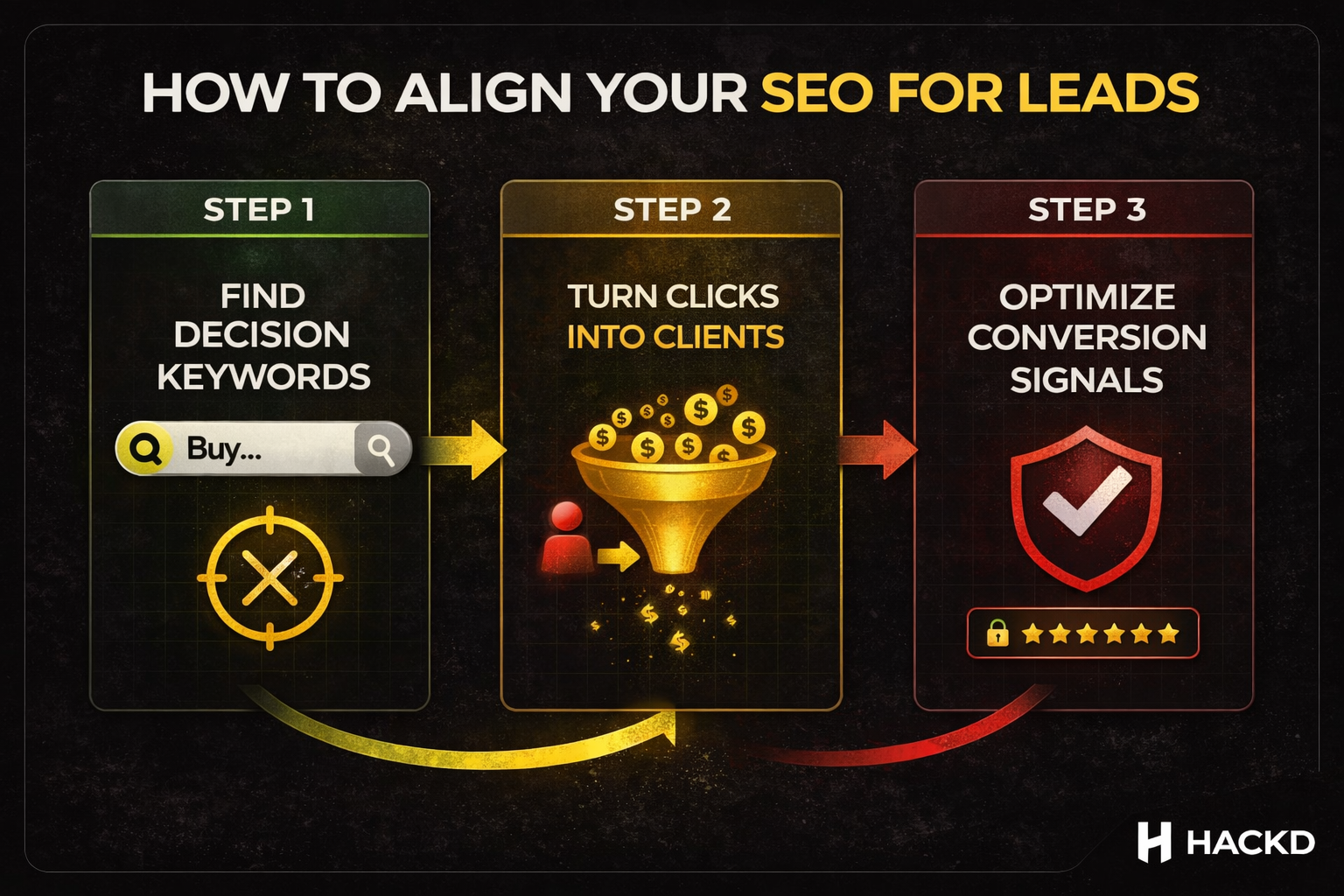
Fixing SEO requires shifting from a traffic-focused approach to a structured, conversion-driven strategy. The goal is to ensure that every visitor is guided towards a clear and relevant action.
Step 1: Focus on Buyer Intent Keywords
Start by targeting keywords that reflect intent to take action rather than just gather information. Queries that include terms like services, agency, pricing, or solutions are more likely to attract users ready to convert. This shift reduces irrelevant traffic and increases lead quality.
Step 2: Align Content with the Funnel
Structure your content to match different stages of the customer journey. Awareness content should introduce problems, while consideration and decision-stage content should guide users towards solutions and services. A clear funnel ensures visitors move logically towards conversion.
Step 3: Build Clear Conversion Paths
Every page should lead users towards a defined action. Use strong calls to action, link content to relevant service pages, and create dedicated landing pages where needed. Clear pathways make it easier for visitors to transition from reading to engaging.
Step 4: Optimise Pages for Conversions (CRO)
Improve how your pages guide and persuade users. This includes simplifying layouts, refining messaging, and reducing friction in the user journey. A well-optimised page increases the likelihood that traffic turns into leads.
Step 5: Add Trust and Authority Signals
Incorporate elements that build credibility, such as testimonials, case studies, and measurable results. When users trust your brand, they are more likely to take action and become leads.
Step 6: Track, Measure, and Optimise Performance
Set up proper tracking to understand how users interact with your site. Monitor conversions, analyse behaviour, and continuously refine your strategy based on data. Ongoing optimisation ensures your SEO efforts improve over time.
Why SEO Without a Conversion Strategy Fails
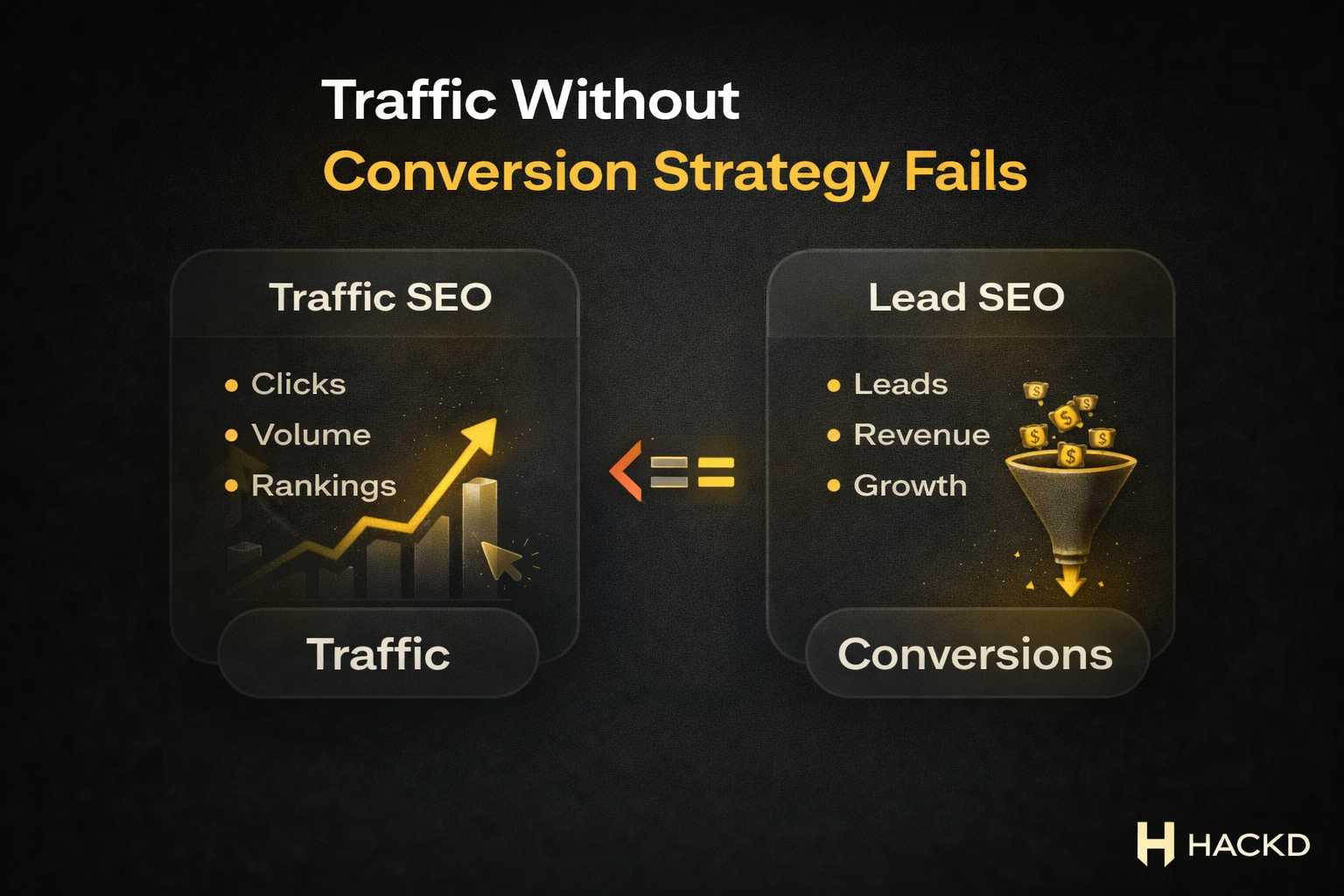
Traffic alone does not drive business growth unless it is supported by a clear conversion strategy. Many businesses invest heavily in rankings and visibility, but without aligning those efforts with lead generation, the results remain limited.
SEO brings users to your website, but a conversion strategy determines what happens next. If there is no structured path guiding visitors towards action, even high-quality traffic will not translate into enquiries or sales. This gap is where most SEO strategies break down.
Focusing only on traffic often leads to misleading performance metrics. High impressions and clicks may appear positive, but without conversions, they do not contribute to revenue. What matters is how effectively your SEO turns visibility into measurable business outcomes.
A conversion-focused approach ensures that every element of your SEO strategy works towards a goal. When intent, content, user experience, and conversion paths are aligned, SEO becomes a reliable channel for generating consistent, high-quality leads.
Traffic-Focused SEO vs Lead-Driven SEO
The difference between SEO that generates traffic and SEO that generates leads comes down to how the strategy is structured. While both approaches can increase visibility, only one is aligned with real business outcomes.
Shifting from a traffic-focused approach to a lead-driven strategy requires rethinking how SEO is planned and executed. When the focus moves from attracting visitors to converting them, SEO becomes a far more effective driver of business growth.
Common SEO Mistakes That Prevent Lead Generation
Avoiding common mistakes is essential if you want SEO to consistently generate leads rather than just traffic. These issues often go unnoticed but have a direct impact on conversion performance.
- Ignoring search intent: Targeting keywords without understanding what users actually want leads to mismatched traffic that rarely converts into enquiries or meaningful actions.
- Writing for algorithms instead of users: Over-optimised content may rank, but if it lacks clarity, relevance, or value, visitors will not engage or take the next step.
- No internal linking strategy: Failing to guide users from blog content to service or landing pages creates dead ends, preventing traffic from progressing towards conversion.
- Lack of clear calls to action: Without strong and visible CTAs, users are left without direction, reducing the chances of turning interest into action.
- No conversion tracking in place: Without tracking enquiries, form submissions, or calls, it becomes difficult to understand what is working and where improvements are needed.
- Over-reliance on blog traffic: Depending solely on informational content without supporting commercial pages limits your ability to convert users who are ready to take action.
Turn Your SEO Into a Lead Generation Engine
Most businesses do not have an SEO problem. They have a conversion problem. Traffic without a clear strategy behind it will always fall short of delivering real business outcomes.
At Hackd Growth, SEO is approached as a complete growth system. That means aligning intent, content, and conversion so every visitor has a defined path towards becoming a lead. The focus is not just on rankings, but on generating measurable results that contribute to revenue.
If your current SEO strategy is not producing leads, the opportunity lies in refining how it is structured. With the right approach, the same traffic can deliver significantly better outcomes.
Start treating SEO as a lead generation channel, not just a visibility tool, and the results will follow.
FAQs
1. Why is my SEO bringing traffic but no leads?
This usually happens when your content targets informational keywords rather than buyer intent, or when there is no clear conversion path guiding users towards taking action.
2. How long does SEO take to generate leads?
SEO can start generating leads within a few months, but consistent results typically come from ongoing optimisation, improved targeting, and aligning content with a conversion strategy.
3. What type of keywords generate the most leads?
Buyer intent keywords such as services, agency, pricing, and solution-based queries tend to generate higher-quality leads compared to general informational searches.
4. Can SEO generate high-quality leads?
Yes, when properly structured, SEO attracts users who are actively searching for solutions, making them more likely to convert into qualified leads.
5. Do I need CRO for SEO to work effectively?
Yes, SEO drives traffic, but conversion rate optimisation ensures that traffic turns into leads by improving user experience, messaging, and conversion paths.
6. How do I track SEO conversions?
You can track SEO conversions by setting up goals in analytics tools, monitoring form submissions, call tracking, and analysing user behaviour on key landing pages.