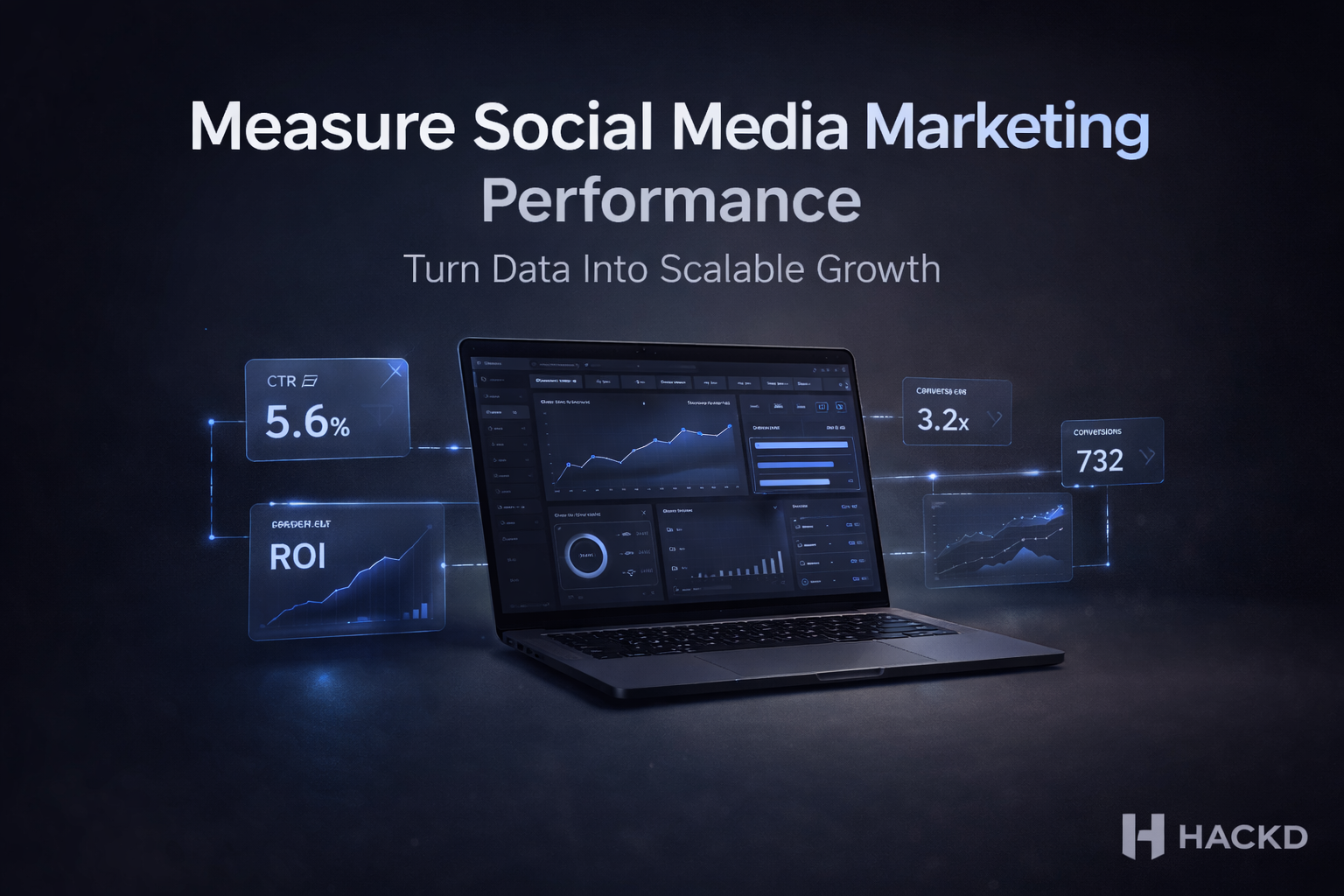
Many businesses invest time and budget into social media but struggle to understand what results they are actually getting. Posts go live, engagement fluctuates, and campaigns run, yet there is little clarity on what is driving real business outcomes. Without proper measurement, social media becomes an activity without direction.
Measuring social media marketing performance changes that. It provides clear insights into what is working, what needs improvement, and where to focus resources for better results. Instead of guessing, businesses can make informed decisions that improve efficiency and return on investment.
This guide breaks down the key metrics, tools, and frameworks needed to measure performance effectively and turn data into scalable growth.
Why Measuring Social Media Performance Matters for Business Growth
Without clear performance measurement, social media becomes guesswork. Data transforms content and campaigns into predictable, scalable growth systems for businesses.
Measuring performance provides clarity on what is actually working. Instead of relying on assumptions, businesses can identify which content, campaigns, and platforms are driving meaningful results. This allows for smarter decisions and more focused strategies.
Understanding performance also connects effort to outcomes. It becomes easier to see how engagement translates into traffic, leads, and conversions. This visibility helps businesses prioritise activities that deliver real value rather than vanity results.
From a cost perspective, measurement improves efficiency. Budgets can be allocated to high-performing campaigns while underperforming efforts are refined or removed. This reduces wasted spend and increases overall return on investment.
Most importantly, consistent measurement enables scalability. When businesses understand what drives results, they can replicate successful strategies and build systems that generate predictable growth over time.
What Is Social Media Marketing Performance?
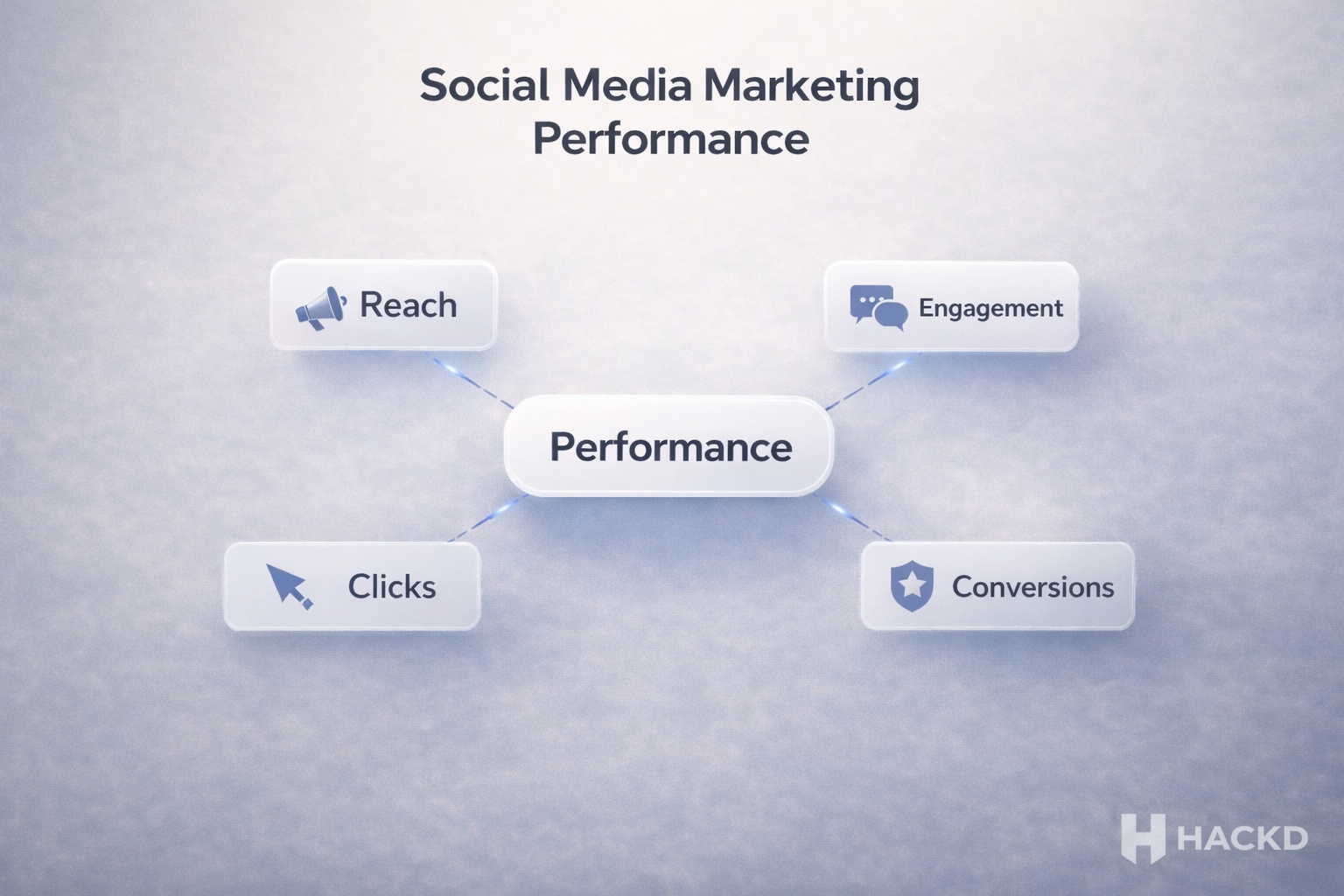
Understanding performance starts with clarity. Before tracking results, it is important to define what social media performance actually means and how it connects to real business outcomes.
Definition of Social Media Performance
Social media marketing performance refers to how effectively your social media activities contribute to your business goals. It measures the impact of your content, campaigns, and engagement in terms of visibility, audience interaction, and, most importantly, conversions and revenue.
Key Components of Performance Measurement
Performance is made up of several core components that reflect different stages of the customer journey. These include reach and impressions for visibility, engagement metrics for interaction, clicks for interest, and conversions for actions taken. Together, these metrics provide a complete picture of how your social media efforts are performing.
Difference Between Metrics and Insights
Metrics are the raw numbers collected from your campaigns, such as likes, shares, and clicks. Insights, on the other hand, are the conclusions drawn from analysing that data. While metrics show what is happening, insights explain why it is happening and what actions should be taken next to improve performance.
Key Metrics to Measure Social Media Marketing Performance
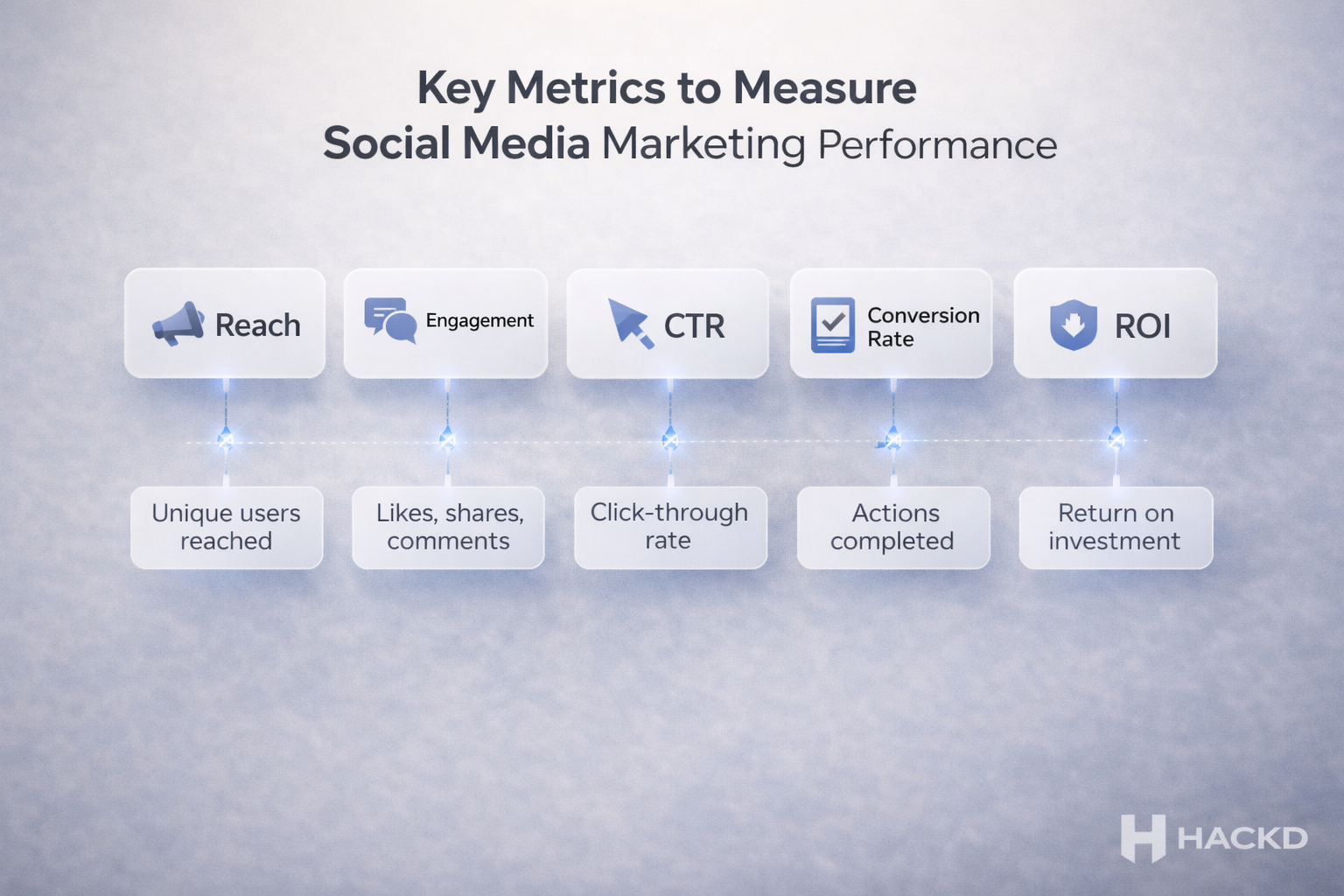
Not all metrics matter equally. Focusing on the right data points ensures businesses measure real impact instead of vanity numbers that do not drive revenue.
Reach and Impressions
Reach shows how many unique users see your content, while impressions track how often it is displayed. These metrics indicate visibility and help businesses understand how effectively their content is being distributed across platforms.
Engagement Metrics
Engagement includes likes, comments, shares, and saves. These actions reflect how users interact with your content and signal relevance to platform algorithms. High engagement often leads to increased visibility and stronger audience connection.
Click-Through Rate (CTR)
CTR measures the percentage of users who click on your content after seeing it. It indicates how compelling your messaging and calls to action are, and whether your content is successfully driving interest.
Conversion Rate
Conversion rate tracks the percentage of users who take a desired action, such as signing up, making a purchase, or submitting an enquiry. It directly reflects how effective your social media efforts are in generating business outcomes.
Cost Per Result (CPR)
CPR measures how much it costs to achieve a specific outcome, such as a click, lead, or sale. It is especially important for paid campaigns, helping businesses assess cost efficiency and optimise spend.
Return on Investment (ROI)
ROI evaluates the overall profitability of your social media efforts by comparing the revenue generated to the costs involved. It is the most important metric for understanding whether your strategy is delivering real business value
Vanity Metrics vs Actionable Metrics
Many businesses focus on likes and followers, but real growth comes from metrics that directly connect to leads, sales, and measurable outcomes.
Vanity metrics are surface-level indicators such as likes, views, and follower counts. While they can signal visibility and engagement, they do not necessarily reflect business impact. High numbers may look impressive, but they often provide limited insight into whether your social media efforts are driving meaningful results.
Actionable metrics, on the other hand, are directly tied to business objectives. These include click-through rates, conversion rates, cost per result, and revenue generated. These metrics help businesses understand how social media contributes to growth and where improvements can be made.
Focusing on actionable metrics allows for better decision-making. Instead of chasing engagement alone, businesses can prioritise strategies that lead to measurable outcomes. This shift turns social media from a branding activity into a performance-driven channel that supports long-term growth.
How to Measure Social Media Marketing Performance Step by Step
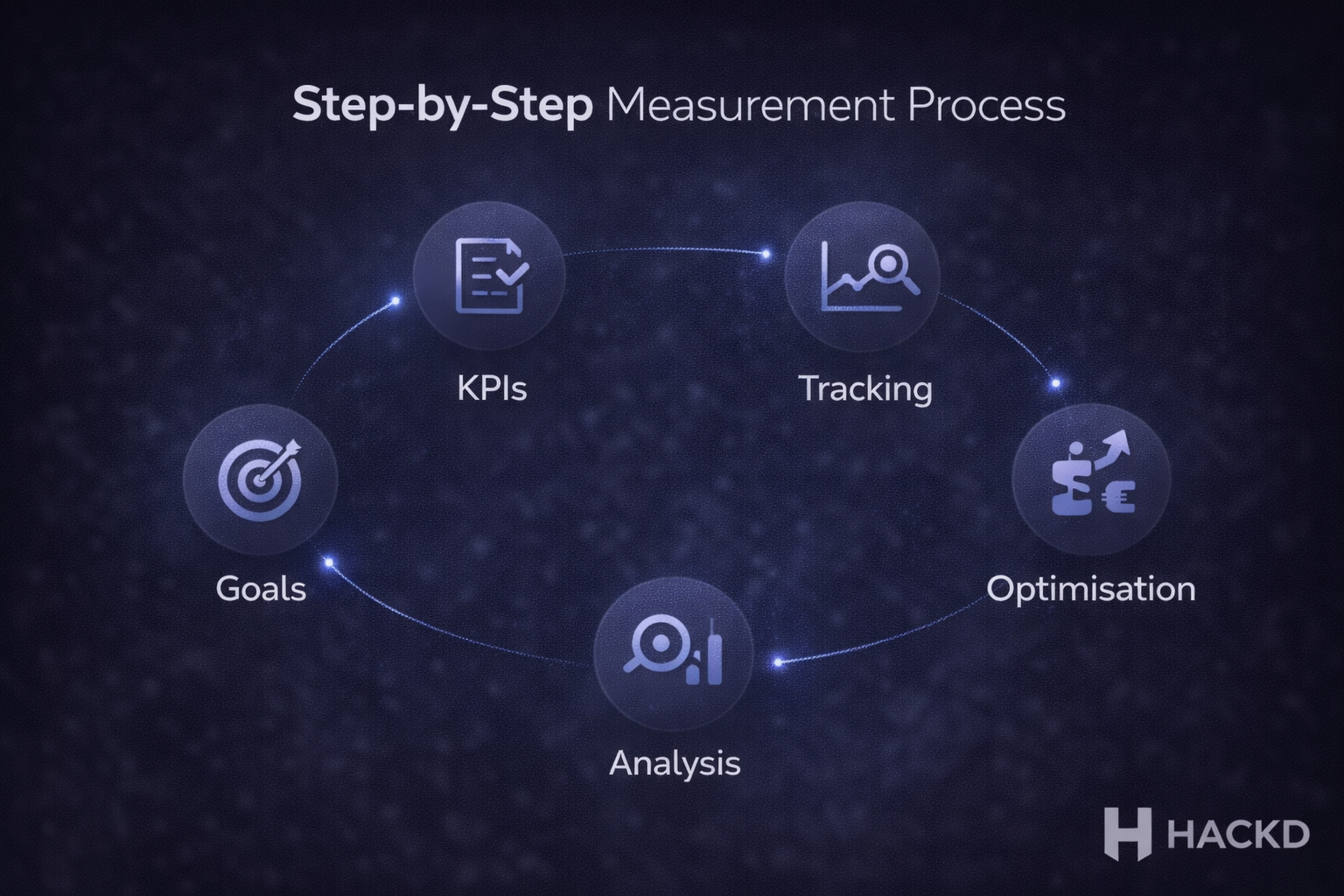
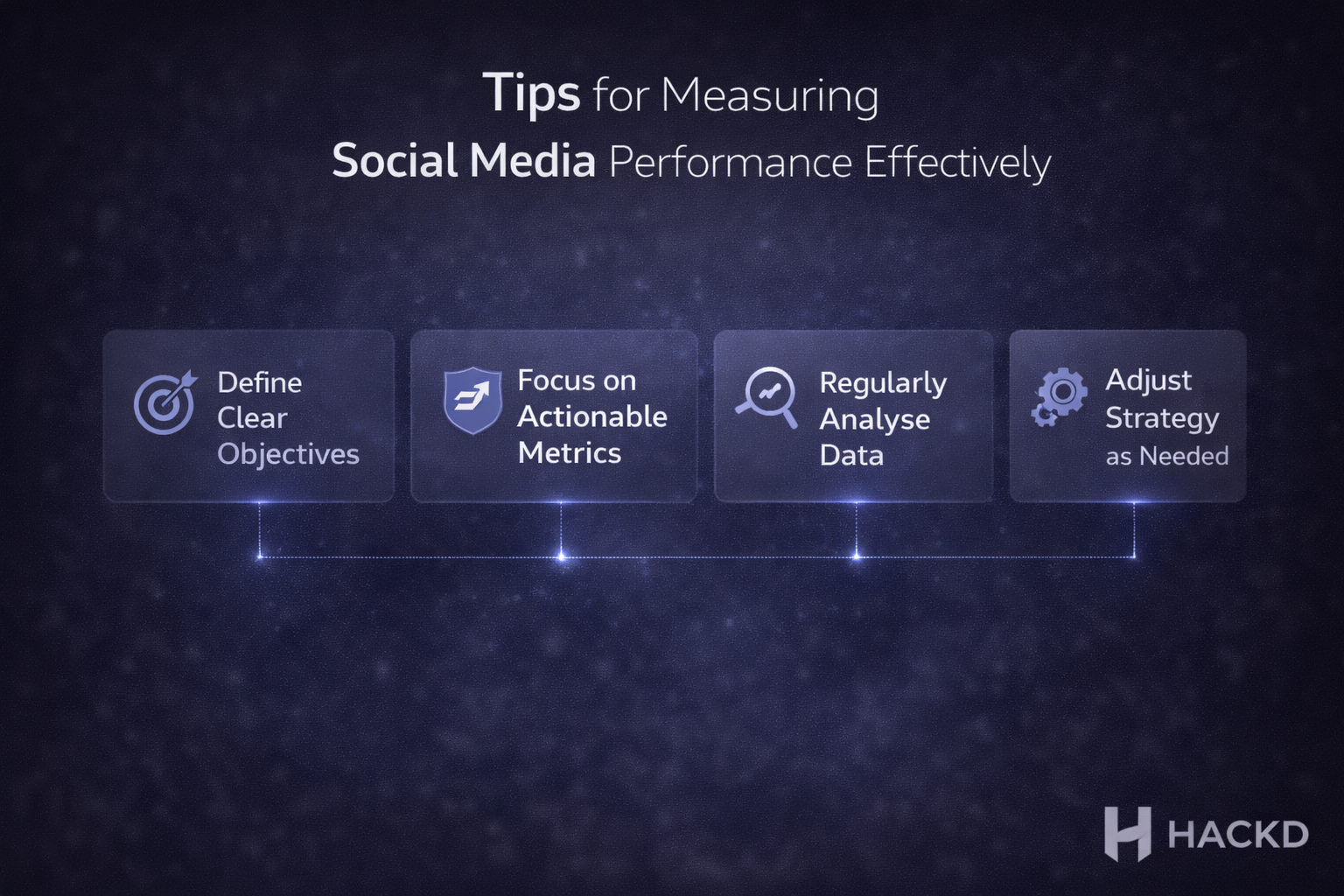
A structured measurement process ensures consistency. When businesses follow clear steps, they can identify what works, optimise faster, and scale performance effectively.
Step 1: Define Clear Business Goals
Start by identifying what you want to achieve through social media. Goals may include increasing brand awareness, generating leads, driving website traffic, or boosting sales. Clear objectives provide direction and ensure that performance is measured against meaningful outcomes rather than generic activity.
Step 2: Select Relevant KPIs
Once goals are defined, choose key performance indicators that align with them. For example, awareness goals may focus on reach and impressions, while conversion goals prioritise clicks and sales. Selecting the right KPIs ensures that you track data that directly reflects success.
Step 3: Track Data Using Tools
Use platform analytics and external tools to collect accurate performance data. Native insights from platforms such as Facebook, Instagram, and LinkedIn provide valuable information, while tools like Google Analytics help track traffic and conversions beyond social media.
Step 4: Analyse Performance Trends
Looking at isolated numbers is not enough. Analyse trends over time to understand patterns in performance. Identify which content types, campaigns, or platforms consistently deliver results and which areas need improvement.
Step 5: Optimise Based on Insights
Use the insights gained to refine your strategy. Adjust content, targeting, and budgets based on what is working best. Continuous optimisation allows businesses to improve efficiency and build scalable systems that drive consistent growth.
Best Tools to Measure Social Media Performance
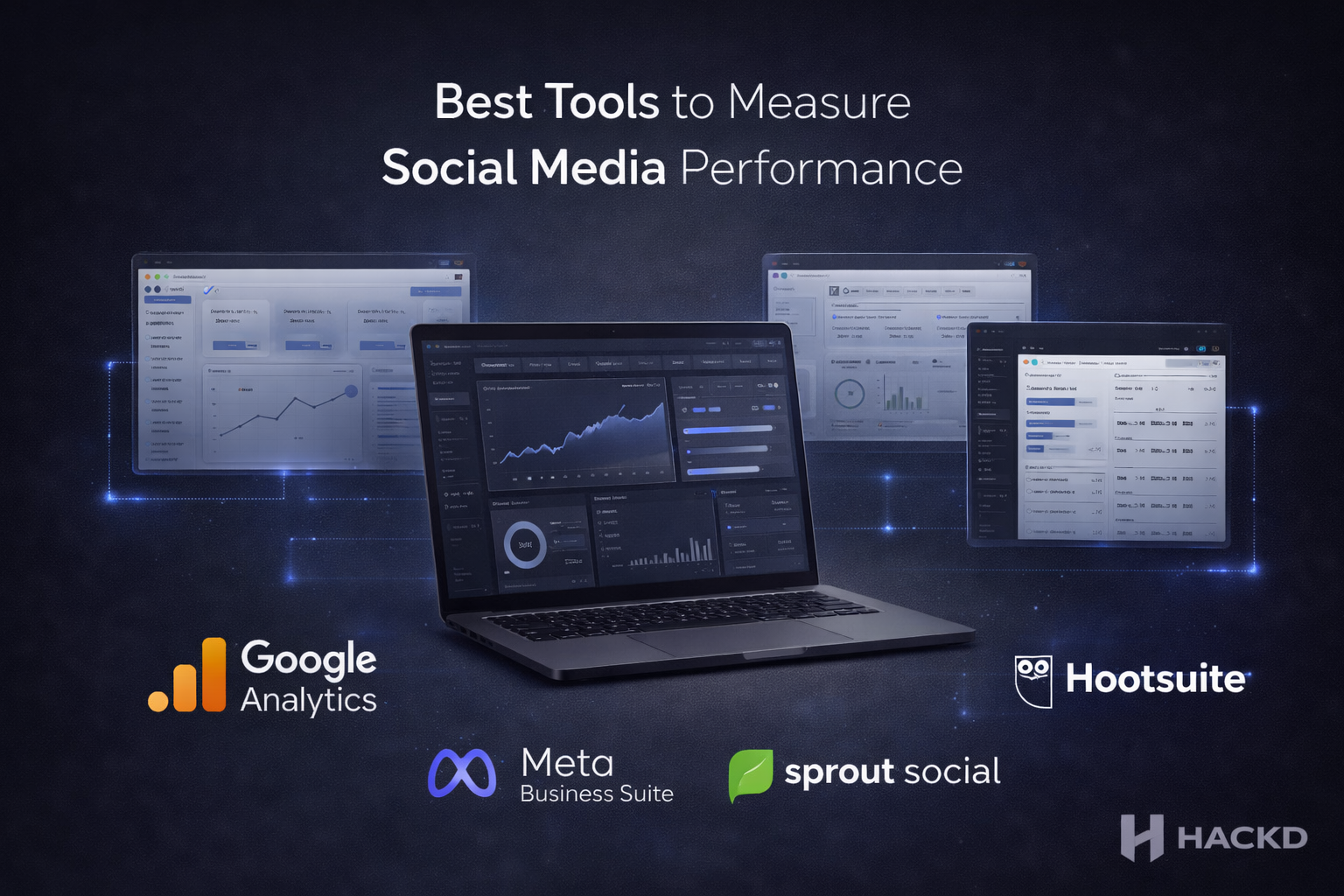
Using the right tools simplifies tracking, reporting, and optimisation. Businesses can gain deeper insights and make faster decisions with accurate, real-time data.
Native Platform Analytics
Most social media platforms provide built-in analytics that offer insights into reach, engagement, and audience behaviour. Tools such as Facebook Insights, Instagram Insights, and LinkedIn Analytics allow businesses to monitor performance directly within each platform and understand how content is performing.
Google Analytics
Google Analytics helps track what happens after users leave social media and land on your website. It provides data on traffic sources, user behaviour, and conversions, allowing businesses to measure how social media contributes to overall marketing performance.
Social Media Management Tools
Platforms like Hootsuite, Sprout Social, and Buffer centralise data across multiple channels. These tools make it easier to schedule content, monitor engagement, and generate performance reports, helping businesses manage and analyse social media activity more efficiently.
Advanced Data and Reporting Tools
For deeper insights, businesses can use advanced dashboards and attribution tools to track performance across multiple channels. These tools connect social media data with broader marketing efforts, enabling more accurate analysis and better decision-making for scaling campaigns.
How to Turn Social Media Data into Growth Strategies
Data alone does not drive growth. The real value comes from translating insights into strategic actions that improve engagement, conversions, and overall marketing performance.
Identify High-Performing Content
Analyse which posts consistently generate strong engagement, clicks, or conversions. Look for patterns in format, messaging, and timing. Replicating these elements allows businesses to build on what already works rather than starting from scratch.
Improve Underperforming Campaigns
Low-performing content provides valuable insights. Instead of discarding it, identify what did not resonate, whether it is targeting, messaging, or format. Making small adjustments can significantly improve results over time.
Refine Audience Targeting
Performance data reveals which audience segments respond best. Use this information to narrow targeting, personalise content, and focus efforts on users most likely to convert. Better targeting improves both engagement and cost efficiency.
Scale What Works
Once successful strategies are identified, increase investment in those areas. This may involve boosting high-performing posts, expanding campaigns, or producing more of the same content type. Scaling proven approaches leads to consistent and predictable growth.
Common Mistakes When Measuring Social Media Performance
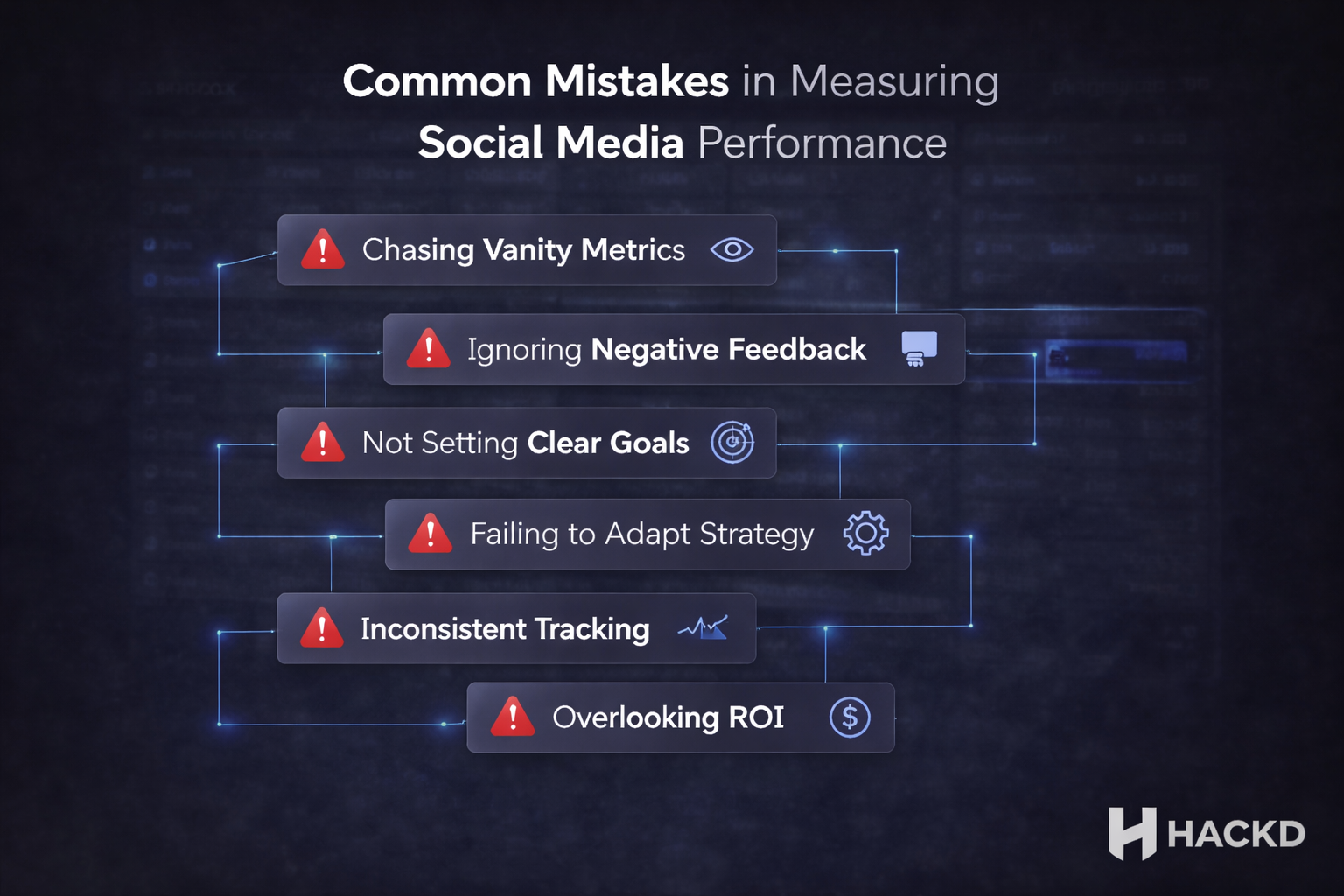
Even with access to data, many businesses misinterpret results. Avoiding common mistakes ensures more accurate insights and better decision-making.
- Tracking too many metrics: Monitoring everything creates confusion and makes it difficult to identify what actually drives results. Focus on KPIs that align with business goals.
- Focusing on vanity metrics: High likes and follower counts can be misleading if they are not connected to traffic, leads, or sales. Prioritise metrics that reflect real outcomes.
- Not aligning metrics with goals: Measuring engagement when the goal is conversions leads to poor decision-making. Each metric should directly support a defined objective.
- Ignoring conversion tracking: Without tracking actions such as sign-ups or purchases, businesses cannot understand how social media contributes to revenue.
- Analysing short-term data only: Looking at performance over a short period can give a distorted view. Trends over time provide more accurate insights for strategy decisions.
How Hackd Growth Helps Businesses Measure and Scale Social Media Performance
Measuring performance is only valuable when it leads to better decisions and stronger results. Hackd Growth builds structured systems that connect data, strategy, and execution, allowing businesses to move beyond surface-level metrics and focus on outcomes that drive revenue.
The approach starts with aligning key performance indicators to business goals. Instead of tracking everything, Hackd focuses on the metrics that directly impact growth, ensuring clarity in reporting and decision-making. Custom dashboards and tracking systems provide real-time visibility across campaigns and platforms.
From there, insights are translated into action. Campaigns are continuously tested, refined, and optimised based on performance data. Both organic and paid strategies are integrated to improve efficiency and maximise return on investment.
By turning data into a clear growth framework, Hackd Growth helps businesses build scalable social media systems that deliver consistent, measurable results.
The Future of Measuring Social Media Marketing Performance
As platforms evolve, measurement is becoming more advanced. Businesses that adapt to new tracking methods and AI-driven insights will gain a competitive advantage.
Social media analytics is increasingly powered by artificial intelligence, allowing platforms to provide deeper insights into user behaviour and content performance. These advancements make it easier to predict trends, understand audience intent, and optimise campaigns with greater precision.
At the same time, privacy changes are reshaping how data is collected and tracked. With limitations on third-party tracking, businesses need to rely more on first-party data and integrated analytics systems to maintain accuracy in performance measurement.
Attribution is also becoming more complex, as users interact with multiple touchpoints before converting. Businesses must adopt broader measurement models that consider the full customer journey rather than relying on single-channel data.
Those that embrace these changes and invest in smarter measurement systems will be better positioned to make informed decisions, improve efficiency, and scale their social media performance over time.
M
Measuring Social Media Performance for Real Business Growth
Measuring social media marketing performance is not about collecting data for reporting. It is about understanding what drives results and using that insight to improve how your business grows. When metrics are aligned with clear goals, social media becomes a structured and predictable channel rather than an uncertain activity.
A focused approach allows businesses to prioritise what works, eliminate inefficiencies, and continuously refine their strategy. This leads to better engagement, stronger conversions, and improved return on investment over time. Consistency in measurement is what turns short-term wins into long-term performance.
If your business wants to move beyond surface-level metrics and build systems that deliver measurable growth, Hackd Growth can help you track, analyse, and scale your social media performance effectively.
FAQs
1. How do you measure social media marketing performance?
Social media marketing performance is measured by tracking key metrics such as reach, engagement, clicks, conversions, and ROI. Businesses define goals, select relevant KPIs, use analytics tools to collect data, and analyse results to improve performance over time.
2. What are the most important social media metrics?
The most important metrics depend on your goals, but typically include reach for visibility, engagement for interaction, click-through rate for interest, conversion rate for actions taken, and ROI for overall effectiveness. These provide a complete view of performance.
3. What is a good ROI for social media marketing?
A good ROI varies by industry and business model, but generally, a positive return where revenue exceeds costs indicates effective performance. The key is consistent improvement and scalability rather than a fixed benchmark.
4. Which tools help track social media performance?
Tools such as platform analytics, Google Analytics, Hootsuite, Sprout Social, and other reporting dashboards help track and analyse performance. These tools provide insights into engagement, traffic, and conversions.
5. How often should you analyse social media performance?
Performance should be monitored regularly, with weekly checks for trends and monthly reviews for deeper analysis. This allows businesses to make timely adjustments while maintaining a long-term view of growth and optimisation.